

Your breast lift recovery week by week journey doesn't kick off when you leave the operating room—it actually begins with smart preparation. From my experience, taking a few proactive steps to get your home, meals, and support system sorted out beforehand is the single best thing you can do for a calm, comfortable healing period.
Setting the Stage for a Smooth Recovery
A successful recovery is truly built on a foundation of good preparation. When you take care of all the logistics before your surgery, you free yourself up to focus completely on what really matters: resting and healing. The main goal here is to create a totally stress-free zone where everything you might need is within easy reach. This cuts down on physical strain and mental worry right from day one. To make sure you're as comfortable as possible, it's a great idea to look into strategies to improve pain relief and recovery before you even get started.
Taking this approach transforms your home into your own personal recovery sanctuary, making the whole process feel much more manageable and a lot less intimidating.
Create Your Recovery Nest
Your main recovery spot, whether it's in your bedroom or on the couch, needs to be all about comfort and minimizing movement. You'll have to sleep on your back in an elevated position to keep swelling down, which makes a recliner an absolute dream. If you don't have one, no problem—you can build a "pillow fort" in your bed.
- Pillow Setup: A good wedge pillow or a stack of firm pillows is perfect for keeping your head and torso propped up at about a 45-degree angle.
- Easy Access: Set up a small table right next to your spot with all the essentials: a water bottle with a straw, your medications, phone charger, TV remote, and some light snacks.
- Comfort is Key: Keep soft blankets and loose, comfortable clothes nearby. Button-up or zip-front tops are non-negotiable, since you won't be able to lift your arms over your head for a bit.
Stock Your Kitchen and Closet
The very last thing you'll feel like doing is cooking a meal or fumbling with clothes. Planning out your food and wardrobe ahead of time is a simple step that pays off big time.
Remember, your body needs good fuel to heal properly. I always tell my patients to focus on nutrient-dense, low-sodium foods to help manage swelling and support tissue repair. Things like pre-made soups, protein shakes, and pre-cut fruit are fantastic choices.
Fill your pantry and freezer with easy-to-heat meals and healthy snacks. For clothing, gather a few front-closing shirts, loose pajama pants, and some slip-on shoes. You'll be living in your surgical bra 24/7, so having a second one on hand for wash day is a smart move.
Arrange Your Support System
You absolutely will not be able to drive or lift anything heavier than a gallon of milk for at least the first week. This is non-negotiable. Having a dedicated caregiver—whether it's your partner, a friend, or a family member—for the first 24 to 72 hours is critical. You can learn more about what to expect by seeing who is a good candidate for a breast lift, which also helps set realistic expectations for your caregiver. This person will be your lifeline, helping with meals, reminding you about medications, and handling basic tasks so you can focus entirely on rest.
The First Week: Your Body's Initial Healing Response
The first seven days after your breast lift are, without a doubt, the most intense part of your recovery. Your body is putting a massive amount of energy into healing, which means your only job is to rest, manage your comfort, and follow our post-op instructions to the letter. It's completely normal to feel tired, sore, and swollen—this is exactly what we expect as your body begins its natural healing process.
Your main focus during this initial period is simple: stay on top of your pain medication, rest with your upper body elevated, and let your support system handle everything else. This is a time for patience, not productivity.
To help your body heal as efficiently as possible, it's also worth looking into proven strategies for healing injuries that can complement your post-operative care plan.
Navigating The First 72 Hours
The first three days are when you'll feel the most discomfort, swelling, and bruising. The effects of anesthesia will be wearing off, leaving you feeling groggy and pretty fatigued.
It is crucial to stay ahead of the pain during this time. Don't wait until the discomfort is severe to take your prescribed medication. Many of our patients set alarms, even through the night, to maintain a steady level of relief. This makes a huge difference in how well you can rest.
You’ll be wearing a specialized surgical bra that provides firm, even compression. This isn't just for comfort; it’s a medical garment designed to minimize swelling, support your newly contoured breasts, and protect the incisions. You'll wear this 24/7, only taking it off for very brief periods if we instruct you to.
Your First Follow-Up Appointment
Sometime during this first week, you'll come back to the office for your first post-op check-in. This is a really important appointment for us to see how your initial healing is progressing.
During this visit, my team and I will:
- Inspect your incisions: We'll check for any signs of infection and make sure everything is healing as it should.
- Change your dressings: The initial surgical dressings will likely be removed and replaced with lighter ones.
- Assess swelling and bruising: We'll take a look to ensure the swelling is within a normal range for this early stage.
- Answer your questions: This is your time to ask about anything you're feeling or wondering about, from odd sensations to when you can shower.
This appointment gives both you and me peace of mind that everything is on the right track. Remember, you won't be cleared to drive yet, so please have someone bring you.
Movement And Activity: A Balancing Act
While rest is the top priority, being completely sedentary isn't the goal. Light, gentle movement is key to promoting good blood circulation and lowering the risk of complications like blood clots.
This simply means taking short, slow walks around your house every couple of hours. A five-minute stroll from your "recovery nest" to the kitchen and back is perfect. It might not feel like much, but it has a significant impact on your healing.
Crucial Reminder: Your activity restrictions are not suggestions—they are rules designed to protect your incisions and your final results. Do not lift anything heavier than a glass of water. Absolutely no reaching overhead, pushing, or pulling.
I often tell my patients to adopt "T-Rex arms" for the first week. Keep your elbows tucked in close to your sides to avoid putting any strain on your chest.
Good preparation is what makes this period of limited activity so much more manageable.
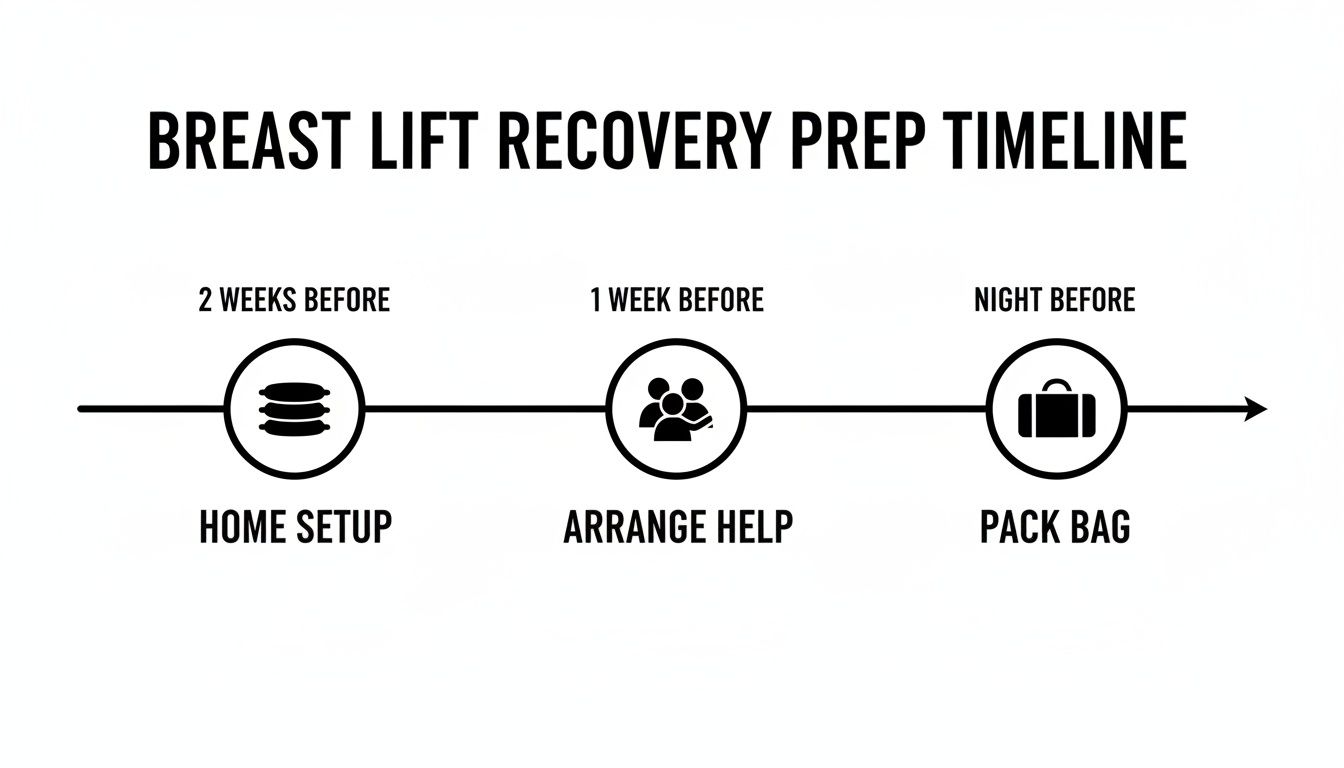
As you can see, the work you do before surgery directly translates into a smoother, more restful healing phase afterward.
To give you a clearer picture, here’s a quick breakdown of what to expect day by day during that first week.
Your Week 1 Recovery Milestones
A quick look at what to expect during the first seven days after your breast lift.
| Day(s) | What You Might Feel | Permitted Activity | Primary Goal |
|---|---|---|---|
| 1-3 | Significant soreness, swelling, fatigue, grogginess. | Very short, slow walks inside the house. | Rest & Pain Management |
| 4-5 | Discomfort lessens, but swelling and tightness persist. | Continued light walking, "T-Rex arms." | Promote Circulation |
| 6-7 | Itching at incision sites, feeling a bit more mobile. | Short walks, no lifting, prepare for follow-up. | Follow Post-Op Instructions |
By the end of this first week, you'll still be sore and moving carefully, but the most challenging part is usually behind you.
Understanding Normal Symptoms
Nearly 100% of patients experience swelling, bruising, and discomfort as the body responds to the surgery. This is completely normal. To manage this, about 80-90% of patients are advised to wear their surgical support bra around the clock. In my practice, I find this is absolutely essential for controlling swelling and supporting the breasts in their new, lifted position—a key factor for achieving beautiful, long-lasting results.
You'll probably also feel a distinct tightness across your chest. As the swelling starts to go down over the next few weeks, this sensation will gradually fade. It's also very common to feel some itching around your incisions as the skin heals. Do your best to resist the urge to scratch
Weeks Two Through Four: Turning a Corner in Your Healing
This period in your breast lift recovery often feels like a massive turning point. That initial, intense fog of the first week starts to lift, and you finally get a real glimpse of the road ahead. You're still very much in the healing phase, of course, but you'll likely feel more like yourself with each passing day as your body makes some real, noticeable progress.
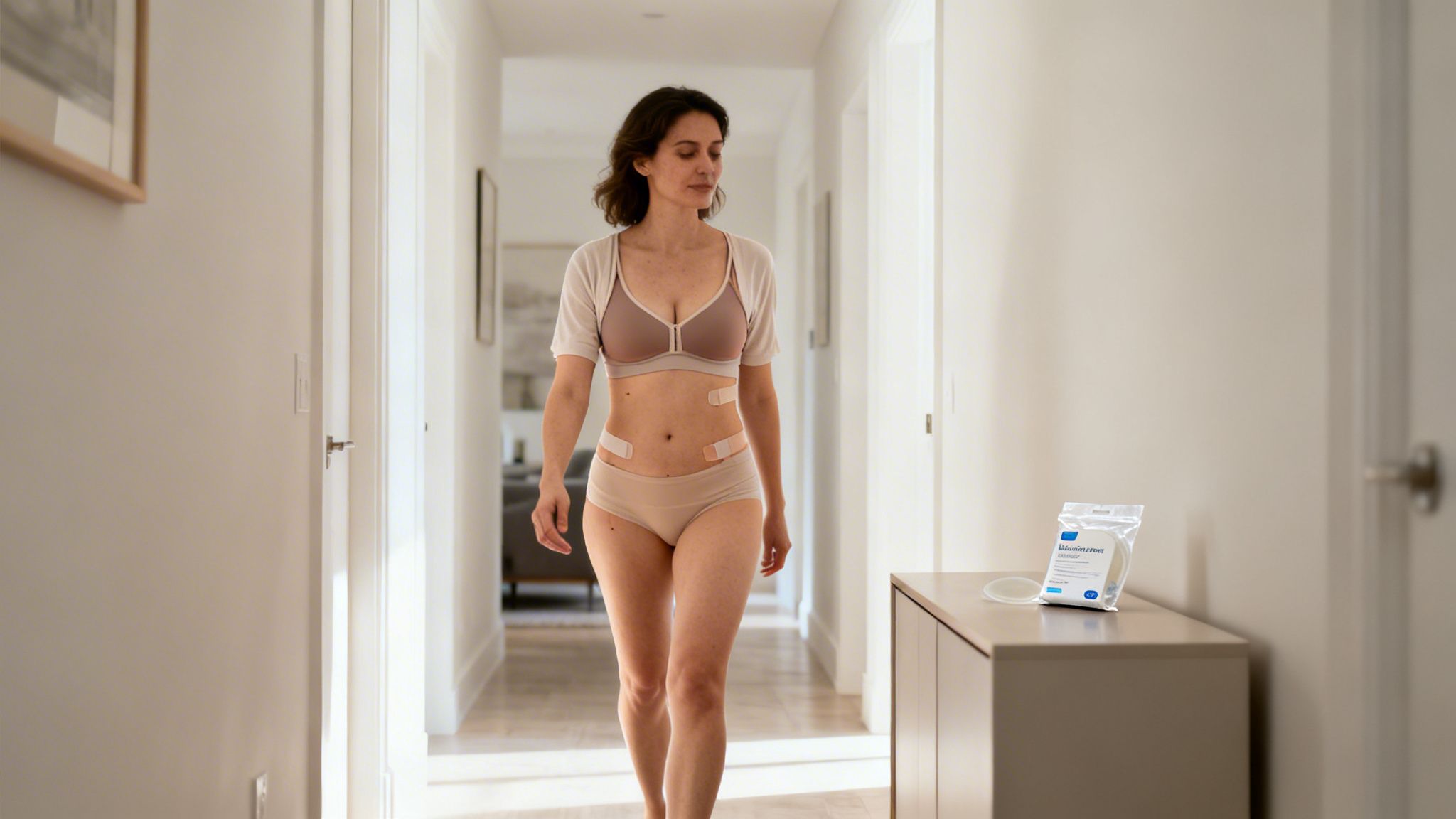
The most dramatic changes you’ll see during weeks two through four are in the swelling and bruising. These symptoms, which were probably your main event in week one, will now begin to fade significantly. You'll notice the skin tone on your breasts starting to look normal again as the discoloration from bruising finally dissipates. Swelling also continues to go down, though this happens more gradually and can definitely fluctuate from day to day.
Shifting Pain Management and Comfort Levels
One of the most welcome changes around this time is graduating from prescription pain medication. As that initial surgical pain lessens, you'll probably find that over-the-counter options like Tylenol are more than enough to handle any lingering soreness or discomfort.
This is also when you'll just start to feel more comfortable in general. The profound fatigue from the first week should be gone, and you’ll have more energy for light activities around the house. It's a clear signal that your body is moving out of the acute phase of healing and into a more restorative one.
Easing Back Into Work and Daily Life
For patients with desk jobs or other non-physical work, getting back into your professional role is often possible during this timeframe. By the second week, many women feel mentally ready and physically comfortable enough to sit at a computer for extended periods.
However, it is absolutely essential to listen to your body. If you can, plan for a gradual return—maybe starting with half-days. Make sure your workspace is set up ergonomically to avoid any strain on your chest or upper body. If your job involves any physical labor, heavy lifting, or a lot of movement, you'll need to wait longer, most likely until after the six-week mark.
By the second week of your breast lift recovery, you're not just imagining it—substantial progress is happening. Research and patient reports show that bruising typically fades for 70-80% of women, and swelling can decrease by as much as 40-60%, though some will persist. Around 75% of patients can comfortably resume light activities like walking, which is fantastic for boosting circulation. This increased mobility helps many patients in our Costa Mesa office feel ready to return to non-strenuous work, aligning with data showing 1-2 week timelines for light duties are common. You can discover more insights about this crucial recovery phase from these plastic surgery specialists.
Next Steps in Incision and Scar Care
Your follow-up appointments during these weeks are important milestones. At one of these visits, your surgeon will likely remove any remaining surgical tape or steri-strips from your incisions. It’s pretty common for stitches to be dissolvable, but if you have any external sutures, they would be taken out around this time.
Once the tape is off, you'll get a clear look at your incisions. Don't be alarmed if they look red or pink and seem slightly raised—this is a completely normal part of the healing process.
This is the official start of your long-term scar care journey. Your surgeon will give you specific instructions, which will probably include things like:
- Gentle Cleansing: Keeping the area clean with just some mild soap and water.
- Avoiding Sun Exposure: This is non-negotiable. Protecting your new scars from UV rays is critical to prevent them from darkening permanently.
- Silicone Products: You may get the green light to start using silicone gel or sheets. These are proven to help soften, flatten, and lighten scars over time.
Navigating Activity Restrictions and Light Exercise
Even though you're feeling better, your body is still working hard to heal internally. Sticking to your activity restrictions is crucial for protecting your results and avoiding any complications.
What You Can Do:
- Walking: Keep it up! Gradually increase the length and pace of your walks. This is excellent for circulation and your overall sense of well-being.
- Lower Body Exercise: Some very light lower-body movements might get your surgeon's approval, like using a stationary bike on a low-resistance setting.
What You MUST Avoid:
- Heavy Lifting: Do not lift anything heavier than about 10 pounds. Seriously. This includes groceries, laundry baskets, and even small children or pets.
- Upper Body Workouts: Any exercise that engages your chest muscles (like push-ups, weightlifting, or rowing) is strictly off-limits.
- Strenuous Cardio: High-impact activities like running or jumping are a no-go. They can cause bouncing and put too much strain on your healing incisions.
Think of this phase as a bridge. You're moving past the most restrictive part of recovery, but you're not quite ready for a full return to your normal fitness routine. Patience now will absolutely pay off with better, more stable long-term results.
Month One to Six: Settling In and Seeing Your Final Shape
The journey through the first month to the six-month mark of your breast lift recovery is a period of incredible transformation. This is where your patience truly pays off as your body settles into its new, beautifully uplifted contours. While the most intense phase of healing is behind you, these months are crucial for refining your final results.
This phase is all about the gradual softening and settling of your breast tissues. If you had implants placed along with your lift, this is when the "drop and fluff" process really becomes noticeable. Initially, implants can sit a bit high and tight on the chest. Over these months, gravity and the natural relaxation of your skin and pectoral muscles allow them to settle into a more natural, rounded position.
The Art of Scar Management
With your incisions fully closed, the focus now shifts entirely to long-term scar management. It's totally normal for your scars to appear pink or reddish and feel a little firm or raised. Our goal during this time is to create the perfect environment for them to mature into fine, pale lines.
Consistency is your best friend here. A dedicated scar care routine can make a huge difference in their final appearance.
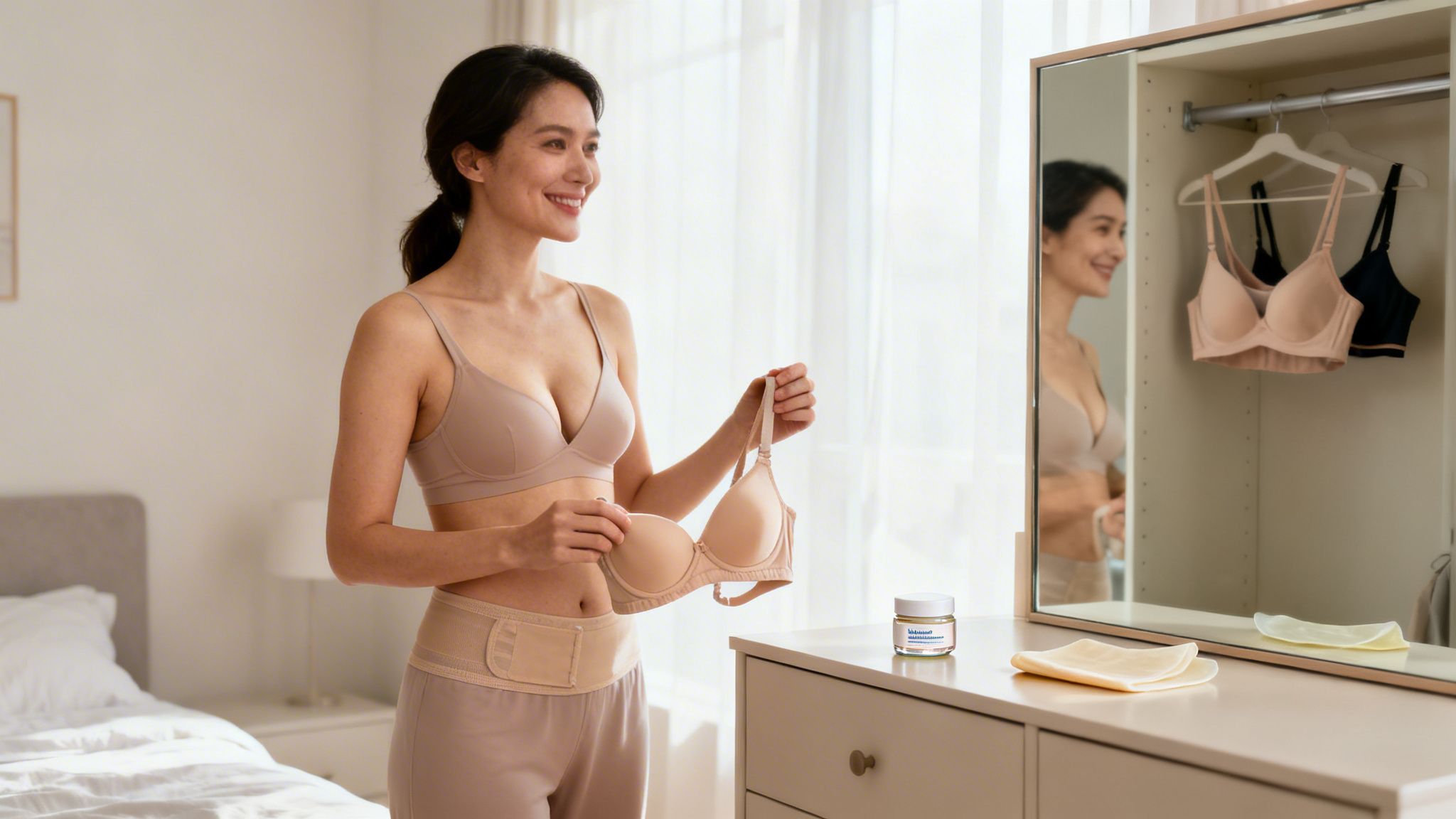
- Silicone Gels and Sheets: These are widely considered the gold standard for treating scars. Silicone hydrates the scar tissue, helps regulate collagen production, and works to flatten and soften the scar. You'll typically apply these every day, following my specific instructions.
- Gentle Massage: Once I give you the all-clear, gentle scar massage can be really beneficial. Using a bit of lotion or vitamin E oil, you can use your fingertips to apply light, circular pressure along the scar line. This helps break down any firm scar tissue and improves its flexibility.
- Sun Protection is Non-Negotiable: UV radiation is the absolute enemy of healing scars. It can cause them to become permanently hyperpigmented, which means they'll end up much darker and more noticeable. You must diligently protect your scars from the sun with a high-SPF sunscreen or by keeping them covered for at least a full year after your surgery.
While every effort is made to minimize scarring, it's an unavoidable part of the procedure. For a deeper dive into what to expect, you can learn more about how a breast lift leaves permanent scars in our detailed guide.
Reintroducing Exercise Safely and Smartly
By six to eight weeks, most of my patients are cleared to slowly and carefully get back to their full exercise routines. The key word here is slowly. Your body has gone through a major surgical procedure, and jumping back into high-intensity workouts too quickly can put your results at risk.
Think of it as a gradual re-entry. You'll want to start with lower-body exercises that don't put any strain on your chest, like using a stationary bike or doing leg presses. From there, you can progressively add in more intense cardio, like running—but always while wearing an extremely supportive sports bra.
A common mistake I see is patients feeling great and immediately trying to pick up where they left off with upper-body strength training. You have to reintroduce exercises like push-ups, chest presses, and any heavy lifting very cautiously, often starting with much lighter weights than you're used to. This prevents strain on the internal sutures and the healing pectoral muscles.
Listen to your body. Any sharp pain or pulling sensation is a clear signal to stop and back off. It’s always better to take an extra week or two than to risk a setback.
Milestones in Sensation and Bra Shopping
As the months go on, you'll notice other positive changes. Numbness in the nipple-areolar complex and the surrounding skin is very common after a breast lift. During this one-to-six-month period, you can expect sensation to gradually return. It might come back as tingling or "pins and needles" at first, which is a great sign that the nerves are regenerating. For some patients, full sensation can take up to a year or more to return.
One of the most exciting milestones is finally getting the green light to shop for new bras! Here's a typical timeline:
| Timeframe After Surgery | Bra Recommendations | Key Considerations |
|---|---|---|
| 4-6 Weeks | Transition from the surgical bra to soft, supportive, wireless sports bras. | Comfort and gentle compression are still the priority. Stay away from underwire. |
| 3 Months | You can typically begin wearing underwire bras for special occasions or shorter periods. | Make sure the wire sits comfortably below the incision line and doesn't cause irritation. |
| 6 Months | Usually cleared to wear any style of bra, including underwire, as your primary support. Your final size is stable. | This is the perfect time for a professional bra fitting to find your new size! |
By the six-month mark, the vast majority of swelling will be gone, and your breasts will have settled into their final, beautiful shape. The results you see now are very close to your long-term outcome, letting you fully enjoy the confidence and comfort that come with your new contour.
Protecting Your Results for the Long Haul
Getting to see your beautiful new breast contour is a huge milestone. It signals the end of your surgical recovery, but it’s really the start of a new chapter: keeping those results looking fantastic for years to come. Think of your breast lift as a major investment in yourself. The habits you build now are what will protect that investment.
This phase is all about making smart lifestyle choices that work with your body to preserve the lift and shape you’ve achieved. It’s less about healing and more about proactive preservation.
The Importance of Weight Stability
One of the single most important things you can do to protect your breast lift is to maintain a stable, healthy weight. Big swings on the scale—both up and down—can directly impact your surgical results.
When you gain a significant amount of weight, the skin on your breasts has to stretch to accommodate the new volume, which can counteract the lift. On the flip side, losing a lot of weight can reduce breast volume and may lead to new sagging. The goal is to find a consistent, healthy weight. This helps preserve the skin elasticity and support your surgeon so carefully restored.
Supportive Bras: Your New Best Friend
Just because you’re done with the 24/7 surgical bra doesn’t mean you’re done with bras altogether. Gravity is always at work, and a high-quality, supportive bra is your best defense against its long-term effects on your newly lifted breasts.
This is especially true during any kind of physical activity. A high-impact sports bra for exercise is non-negotiable. It drastically minimizes breast movement, which reduces stress on the skin and the internal tissues that hold everything up. For daily wear, a well-fitted bra provides the structural support needed to maintain your breast position and shape.
A common myth is that after a lift, bras become optional. The reality is, consistent support is what helps you defy gravity and extend the life of your results. Making a great bra a non-negotiable part of your daily routine is one of the simplest and most effective ways to protect your investment.
Navigating Future Life Events
Life, of course, goes on after surgery. Major events like a future pregnancy can definitely have an impact on your breast lift results. The combination of hormonal changes, weight gain, and milk production will cause the breasts to enlarge and the skin to stretch again. While your lift provides a fantastic new baseline, these natural processes can lead to some degree of sagging.
The natural aging process will also continue. Over time, your skin will gradually lose some of its elasticity, which can affect the longevity of your lift. However, a breast lift essentially "resets the clock," meaning you will always look better than you would have without the procedure.
Knowing what to expect is key. By maintaining a stable weight and making good bra habits part of your routine, you give yourself the best possible chance of enjoying your results for many, many years, no matter what life brings. To set realistic expectations, you can learn more about how long a breast lift lasts and the factors that influence its longevity.
Your Top Questions About Breast Lift Recovery
As you move through your breast lift recovery week by week, you’re bound to have questions. It’s completely normal. Having clear, straightforward answers can make a world of difference, helping you feel more confident and in control of your healing process.
Below, I’ve answered some of the most common questions my patients ask, covering everything from daily activities like sleeping to long-term goals like getting the best possible scars.
When Can I Sleep on My Side After a Breast Lift?
This is a big one, and the short answer is: patience is key. You'll need to sleep on your back, propped up with pillows, for at least the first 4 to 6 weeks.
This elevated position is absolutely crucial. It does two very important things: it helps minimize the swelling that’s most significant in the early weeks, and more importantly, it prevents any pulling, pressure, or strain on your healing incisions. Turning onto your side or stomach too soon can tug on those suture lines, which could compromise your final shape and even lead to wider scars. At your follow-up appointments, I’ll check on your progress and let you know exactly when it’s safe to start changing positions.
How Long Will Swelling and Numbness Really Last?
Swelling and numbness are probably the two longest-lasting symptoms you’ll experience. Most of the noticeable, significant swelling will go down within the first 4 to 6 weeks. But don't be surprised if you have subtle, residual puffiness that comes and goes for up to six months. That’s just your tissues settling and softening.
Numbness, especially around your nipples and along the incision lines, is also totally expected. Sensation usually comes back gradually over several months, often starting as a tingling or "pins and needles" feeling. For some patients, it can take up to a year for feeling to return to normal, and it’s important to know that minor permanent changes in sensation are a possibility.
Recovery isn't one-size-fits-all. While this timeline is a great guide, your body's response is unique. Listening to what your body is telling you and keeping in touch with my team are the best ways to ensure a smooth, successful process.
What Are the Major Red Flags I Should Watch For?
Complications are not common, but being vigilant is a critical part of a safe recovery. Knowing the warning signs allows you to act quickly if something seems off.
Please contact my office immediately if you experience any of the following:
- A fever that climbs over 101°F (38.3°C).
- Pain that suddenly gets much worse instead of gradually getting better.
- Redness, warmth, or hardness that is spreading out from your incisions.
- Any thick, yellow, or foul-smelling drainage from the incision sites.
- One breast suddenly becoming much larger, harder, or significantly more painful than the other (this could signal a hematoma).
How Can I Get the Best Possible Scars?
Achieving faint, minimal scars is a true partnership between my surgical technique and your diligent aftercare. The first and most important step is to follow all of my post-operative instructions for incision care to the letter.
Once you get the green light from me (usually after two to three weeks), we can start a dedicated scar treatment plan. This often involves silicone sheets or gels, which are clinically proven to help flatten, soften, and lighten scars by keeping them hydrated and protected.
But the most critical part of scar care is sun protection. You absolutely must keep your scars completely protected from the sun for at least one full year. UV exposure can cause permanent hyperpigmentation, making scars much darker and more noticeable for good.
At Michael A. Bain, MD, we are dedicated to providing the highest level of care from your initial consultation through your final recovery. If you are considering a breast lift in the Newport Beach area and want refined, natural-looking results, we invite you to schedule a consultation to discuss your goals. Learn more and book your appointment by visiting our website: https://www.drbain.com.
Made with Outrank