

Eyelid surgery, or blepharoplasty, can refresh and rejuvenate your appearance, but a smooth recovery is paramount to achieving the best possible results. The days and weeks following your procedure are a critical time for healing. While the thought of recovery can be daunting, having a clear, actionable plan transforms it from a period of uncertainty into a structured path toward your final, beautiful outcome. This guide provides a detailed breakdown of essential eyelid surgery recovery tips, drawn from extensive clinical experience, to help you feel prepared and in control.
Understanding exactly what to do, and when, can significantly impact your comfort, reduce swelling and bruising, and support optimal scar healing. From managing your sleep position to knowing when it's safe to resume daily activities, each step plays a vital role. Proper aftercare not only protects the delicate surgical area but also accelerates your return to normal life, allowing you to enjoy your refreshed look sooner.
This article details a complete post-operative care plan, covering everything you need for a successful blepharoplasty recovery. For our patients in Newport Beach, we've included specific notes from Dr. Michael A. Bain to ensure your recovery is as comfortable and efficient as possible, setting you up for the refined, natural-looking results you deserve. Let's walk through the essential steps to protect your investment and ensure a seamless healing process. You will learn about:
- Immediate Post-Op Care: Using cold compresses and elevating your head.
- Wound and Medication Management: Caring for incisions and controlling discomfort.
- Lifestyle Adjustments: Restricting activity and understanding timelines for makeup and contacts.
- Long-Term Healing: Promoting minimal scarring and knowing when to contact your surgeon.
1. Cold Compress Application in the First 48 Hours
One of the most effective eyelid surgery recovery tips is to begin applying cold compresses immediately after your procedure. This simple step is your first line of defense against the primary post-operative concerns: swelling and bruising. The cold temperature works by constricting the delicate blood vessels around your eyes, which limits fluid accumulation and internal bleeding that manifests as visible bruising. Disciplined application during the crucial first 48 hours can significantly reduce discomfort and accelerate your initial healing.
Most plastic surgeons, including Dr. Bain, recommend a consistent cycle of 15-20 minutes on, followed by at least 20 minutes off. This "off" period is just as important as the "on" period, as it prevents skin damage from over-exposure to cold and allows blood flow to return, which is necessary for tissue health. Many of Dr. Bain’s Newport Beach patients who stick to this schedule report a noticeable decrease in swelling by day three.
Practice Note: For his blepharoplasty patients, Dr. Michael A. Bain often recommends specialized surgical ice packs or cooling masks. These are designed to conform perfectly to the orbital area, providing even and consistent cooling without putting undue pressure on the incision sites.
How to Properly Apply Cold Compresses
To get the most benefit from cold therapy, preparation and proper technique are key. Generic ice packs can be stiff and awkward, so consider more flexible options.
- Preparation is Key: The night before your surgery, prepare your cooling station. Freeze several soft gel packs. If you don't have those, small bags of frozen peas or corn work well as they mold easily to the contours of your face.
- Create a Barrier: Never apply a frozen pack directly to your skin. This can cause frostbite or damage the delicate, healing tissue. Always wrap your cold source in a thin, clean barrier like a paper towel, a soft washcloth, or a piece of surgical gauze.
- Stay on Schedule: It's easy to lose track of time when you're resting. Set alarms or timers on your phone to remind you when to start and stop your 20-minute intervals. Consistency is the most important factor for success.
- Combine with Elevation: For maximum effect, apply your cold compresses while resting with your head elevated above your heart. This combination uses both cold and gravity to help drain fluid away from the surgical site, further minimizing puffiness.
2. Head Elevation and Sleep Position Management
Following cold compress application, managing your head elevation and sleep position is another crucial component of the best eyelid surgery recovery tips. This technique uses simple gravity to your advantage, helping to minimize swelling and pressure around the delicate surgical sites. By keeping your head consistently elevated above the level of your heart, you encourage fluids to drain away from your face, which can dramatically reduce puffiness, discomfort, and the "tight" feeling common after blepharoplasty.

The impact of this practice is significant. Medical studies have shown that proper elevation can reduce the need for pain medication by 25-35%. Many of Dr. Bain's Orange County patients who diligently maintain elevation report a swelling resolution that feels up to 50% faster than they anticipated. This simple, non-invasive habit supports the body’s natural lymphatic drainage system, accelerating healing from the moment you get home.
Practice Note: For his Newport Beach blepharoplasty patients, Dr. Michael A. Bain stresses that elevation is not just for nighttime sleep. He advises maintaining an elevated posture even during daytime rest, such as when watching TV or reading, for at least the first week to maximize its anti-swelling benefits.
How to Properly Manage Elevation and Sleep Position
Achieving consistent and comfortable elevation requires a bit of setup. The goal is a 30-45 degree angle, maintained for as long as possible, especially during the first 1-2 weeks post-surgery.
- Build Your Nest: Before your surgery, arrange your bed for recovery. Stacking 3-4 pillows can work, but a more stable and ergonomic solution is a therapeutic wedge pillow placed under your regular pillows. This provides a consistent incline and prevents you from slipping down during the night.
- Sleep on Your Back: It is essential to sleep on your back for the first two weeks. Sleeping on your side or stomach can put direct pressure on your incisions, potentially disrupting sutures, increasing swelling on one side, and negatively impacting your final results.
- Prevent Rolling: If you are naturally a side-sleeper, use body pillows or rolled-up blankets tucked tightly along your sides. This creates a physical barrier that helps keep you in the correct supine position while you sleep.
- Prioritize Comfort: Proper elevation should not cause neck strain. To aid in maintaining the necessary head elevation and ensure comfort, consider options for selecting a pillow for neck and shoulder pain to support proper spinal alignment during your rest.
3. Prescribed Eye Drops and Lubricant Maintenance
Following your surgeon's instructions for eye drops and ointments is a critical component of the eyelid surgery recovery tips. After a blepharoplasty, your eyes are vulnerable to infection and dryness. Prescribed drops are your primary tool for preventing infection, managing inflammation, and keeping the surface of your eyes (the cornea) healthy and moist. Proper lubrication is vital because the surgery can temporarily disrupt normal tear distribution and even complete eyelid closure, making your eyes more susceptible to irritation.
Using these medications correctly ensures a smooth healing process and protects your vision. Your surgeon will prescribe a specific regimen, often involving antibiotic drops like tobramycin or moxifloxacin to prevent bacterial growth and lubricating drops to maintain comfort. Sticking to this schedule is not just a suggestion; it's essential for a successful outcome.
Practice Note: To help patients manage what can be a confusing schedule, Dr. Michael A. Bain's practice provides a detailed, often color-coded, drop instruction card with every procedure. This simple chart helps his Newport Beach patients easily track which drops to use and when, removing guesswork and ensuring compliance.
How to Properly Administer Eye Drops
Correctly applying eye drops maximizes their effectiveness and prevents contamination of the bottle tip or your eye. A steady hand and a calm approach are all you need.
- Create a Clear Schedule: As soon as you get your prescriptions, write down a schedule. List each drop, the time it needs to be administered, and a checkbox for each dose. Set corresponding alarms on your phone to ensure you never miss an application.
- Master the Technique: Wash your hands thoroughly. Gently pull down your lower eyelid to create a small pocket. Tilt your head back, look up, and squeeze a single drop into the pocket without letting the bottle tip touch your eye or eyelid.
- Allow for Absorption: After instilling the drop, close your eye gently for 2-3 minutes. Do not blink rapidly or squeeze your eye shut, as this can push the medication out. If you need to apply more than one type of drop, wait at least five minutes between applications.
- Manage Dryness: In addition to prescribed drops, your surgeon will likely recommend using preservative-free artificial tears frequently throughout the day. If you experience persistent dry eye symptoms after surgery, which can sometimes occur, exploring various dry eye treatment options can provide relief. Always discuss any persistent symptoms with your surgeon.
4. Activity Restriction and Gradual Return to Exercise
One of the most critical eyelid surgery recovery tips is to strictly control your physical activity. Any action that raises your blood pressure, including bending, lifting, or strenuous exercise, can increase swelling and put you at risk for bleeding or straining your incision lines. Following a structured, gradual return to normal activities is essential to protect the delicate surgical area and ensure your results are not compromised. Diligently observing these restrictions prevents complications and supports a smoother, faster healing process.
Dr. Bain provides his patients with a detailed, week-by-week activity guide to eliminate any guesswork. For example, his Orange County patients with desk jobs are often cleared to return to work within a week, provided they avoid any heavy lifting. However, patients with physically demanding jobs, like manual laborers or fitness instructors, typically require at least three to four weeks off to ensure proper healing. Understanding the full timeline for blepharoplasty recovery helps patients plan accordingly for time off work and social activities.
Practice Note: For his blepharoplasty patients, Dr. Michael A. Bain emphasizes that listening to your body is paramount. If you experience a sudden increase in swelling, pain, or throbbing after an activity, it's a clear sign you have done too much, too soon. He advises patients to stop immediately, rest with their head elevated, and apply a cold compress.
How to Properly Manage Your Activity Levels
Navigating the recovery period requires a mindful approach to movement. Adhering to a phased plan will protect your surgical results and minimize setbacks.
- Plan for Rest: In the first week, your only job is to rest. Avoid any bending over or lifting anything heavier than five pounds (about a half-gallon of milk). Keep your head elevated above your heart at all times, even while sleeping. Also, avoid hot showers, which can increase swelling; opt for lukewarm water instead.
- Embrace Light Movement: During the second week, you can typically begin light walking. This gentle activity promotes healthy circulation without elevating your heart rate or blood pressure significantly. Continue to avoid jogging, yoga, weight training, or any other moderate-to-high-intensity workouts.
- Gradual Reintroduction: After your surgeon gives you clearance, usually around week three or four, you can start to slowly reintroduce more vigorous cardiovascular exercise. Start at a lower intensity and duration than you are used to and see how your body responds before gradually increasing.
- Await Final Clearance: High-impact activities, contact sports, and swimming must be avoided until you receive explicit permission from your surgeon. Swimming pools and hot tubs can harbor bacteria that pose an infection risk to healing incisions, so this restriction is usually in place for at least three weeks.
5. Incision Care and Suture Management
Meticulous incision care is a cornerstone of a successful eyelid surgery recovery. Proper wound management is essential for preventing infection, minimizing scarring, and ensuring the delicate skin around your eyes heals cleanly and smoothly. The skin of the eyelids is incredibly thin and has an excellent blood supply, which allows for rapid healing, but this also means that attentive care in the initial days following surgery pays significant dividends in the long-term aesthetic outcome.
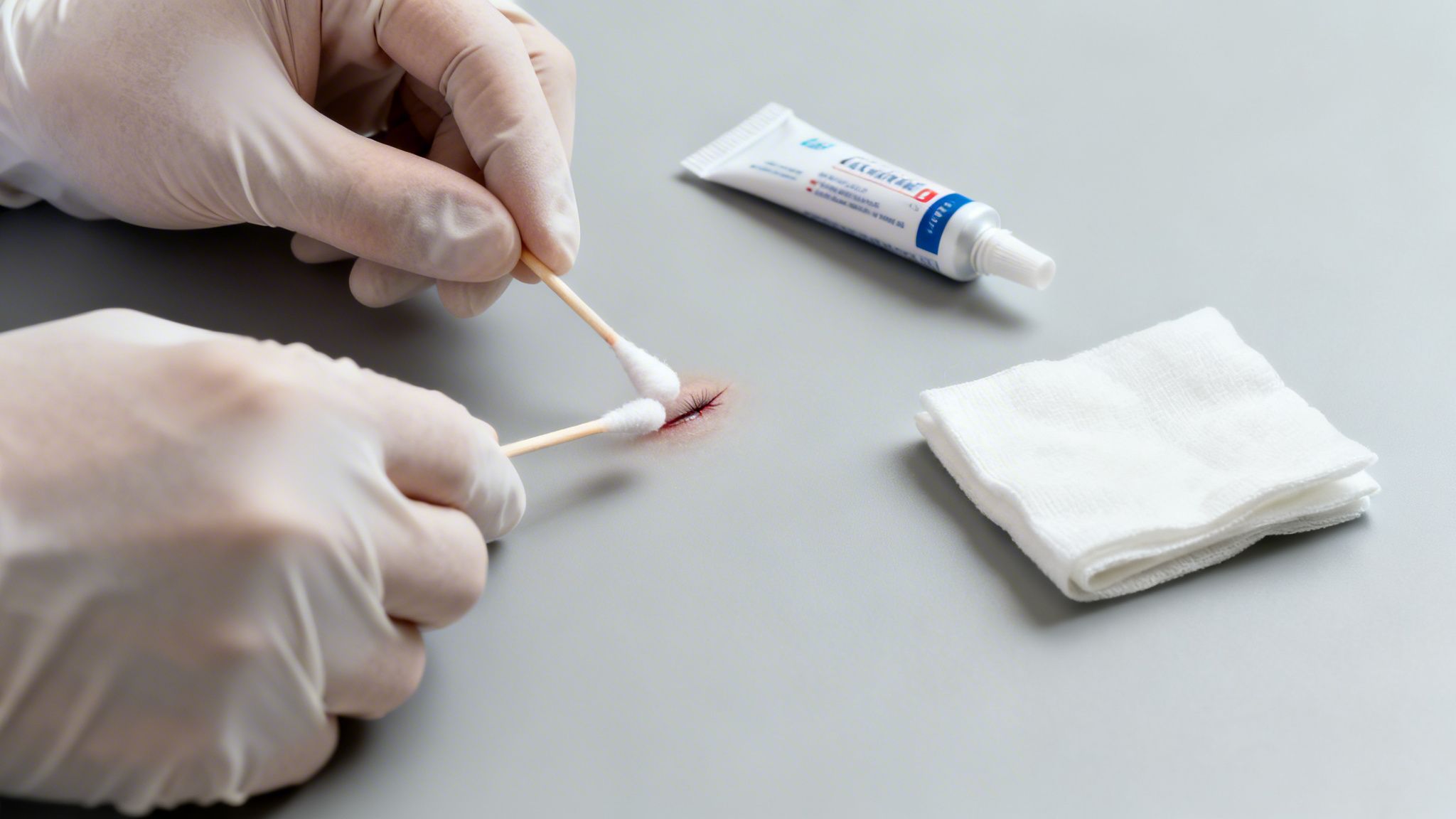
The primary goal of post-operative wound care is to create a clean, protected environment that supports the body's natural healing process. Following your surgeon's specific instructions for cleaning and ointment application is non-negotiable. With consistent care, most patients find their incision lines fade remarkably well, becoming fine, faint lines that are virtually imperceptible within 3 to 6 months.
Practice Note: For his blepharoplasty patients, Dr. Michael A. Bain provides a detailed care kit complete with written and photographic instructions. This ensures his Newport Beach patients feel confident managing their incisions at home, which is key to achieving scars that heal beautifully and are rarely noticeable.
How to Properly Care for Your Incisions
Following a precise cleaning and care routine is critical. Your surgeon will provide specific directives, but the following tips outline the general best practices for this important part of your eyelid surgery recovery.
- Establish a Cleaning Routine: Gently clean your incisions as directed, typically once in the morning and once at night. Use a cotton swab (Q-tip) dipped in sterile saline or a gentle cleanser recommended by your surgeon to softly dab away any crusting.
- Pat, Don't Rub: After cleaning, use a fresh, sterile gauze pad to gently pat the area dry. Never rub or wipe the incisions, as this can irritate the healing tissue and strain your stitches.
- Apply Ointment Sparingly: Using a new, clean cotton swab, apply a very thin layer of the prescribed antibiotic or lubricating ointment directly onto the incision line. This keeps the area moist, prevents scabbing, and provides a barrier against bacteria.
- Keep the Area Dry: When showering, be careful to avoid direct spray from the showerhead onto your face. Keeping the incisions dry, outside of your scheduled cleanings, is vital for preventing infection.
- Attend Suture Removal: Your follow-up appointment for suture removal, usually 5 to 7 days after surgery, is mandatory. Experienced staff at Newport Beach surgery centers will perform this quick and sterile procedure to allow the next phase of healing to begin.
- Protect from the Sun: Once your sutures are out and your surgeon gives the okay, sun protection is your best tool for scar management. Diligent application of a broad-spectrum sunscreen with at least SPF 50+ for a minimum of three months will prevent the new scar tissue from darkening. If you are concerned about the final appearance of your scars, you can learn more about how blepharoplasty scars typically heal and what to expect over time.
6. Medication Management and Pain Control
Properly managing your medications and controlling discomfort is a key component of a smooth eyelid surgery recovery. While blepharoplasty is not typically associated with severe pain, a strategic approach to using prescribed and over-the-counter medications ensures you remain comfortable. This allows your body to focus its energy on healing rather than managing pain, which is essential during the initial recovery phase.
Fortunately, most patients report that any discomfort is mild and primarily feels like tightness or soreness around the eyes. This is usually well-managed with the prescribed regimen. The goal is to stay ahead of the pain, preventing it from escalating and disrupting your rest. A proactive strategy for medication is one of the most effective eyelid surgery recovery tips for ensuring a calm and comfortable healing process.
Practice Note: Dr. Bain informs his Newport Beach blepharoplasty patients that significant pain is rare. Most individuals require prescription pain medication for only 3 to 5 days, with some finding that comfort measures and over-the-counter options are sufficient.
How to Properly Manage Your Post-Op Medications
A well-organized approach to your medication schedule can make a significant difference in your comfort levels. Planning ahead and understanding what to take, and when, will prevent unnecessary stress.
- Establish a Schedule: Don't wait for pain to become severe before taking your prescribed medication. In the first 24-48 hours, it's wise to take your medication on a set schedule as directed by your surgeon. This proactive approach keeps pain at a manageable level.
- Avoid Blood Thinners: It is crucial to avoid aspirin, NSAIDs (like ibuprofen, Advil, and Aleve), and certain herbal supplements for at least 1-2 weeks post-surgery unless explicitly approved by your surgeon. These substances can thin the blood and increase the risk of bleeding and bruising.
- Take with Food: Prescription pain medications, which are often mild opioids like acetaminophen with codeine, can sometimes cause nausea. Always take them with a small snack or a light meal to minimize stomach upset.
- Transition to OTC: As your discomfort subsides, typically around day 3 to 5, you can transition to an over-the-counter pain reliever like Tylenol (acetaminophen). This process is similar to recovery from other procedures, where managing initial discomfort is key. To understand how post-operative care evolves, you can explore guides on topics like breast augmentation recovery.
- Abstain from Alcohol: Do not consume alcohol while you are taking prescription pain medication. The combination can lead to dangerous side effects, suppress your respiratory system, and impair your judgment.
7. Follow-Up Appointments and Surgeon Communication
Your eyelid surgery journey doesn't end when you leave the operating room; it transitions into a partnership with your surgeon throughout the recovery phase. Attending all scheduled follow-up appointments is one of the most crucial eyelid surgery recovery tips. These visits are essential for your surgeon to monitor your healing progress, ensure your incisions are closing properly, and catch any potential complications before they become serious problems. Consistent communication provides reassurance and keeps your recovery on the right track.
Regular check-ins allow your surgeon to assess swelling, bruising, and scar maturation against expected recovery milestones. This personalized oversight ensures that your healing is progressing as it should and allows for timely adjustments to your care plan if needed. Patients who maintain open communication with their surgeon often feel more confident and in control of their recovery process.
Practice Note: For his blepharoplasty patients, Dr. Michael A. Bain’s Newport Beach practice emphasizes a structured follow-up schedule. Staff at his office, Hoag Memorial Hospital, and the Newport Beach Surgery Center coordinate to ensure seamless post-operative care. Many of his Orange County patients find the convenient location essential for easy access to these important visits, which are typically scheduled around the 7-day, 14-day, 21-day, and 6-week marks.
How to Maximize Your Follow-Up Visits
To make the most of each appointment, a little preparation goes a long way. These visits are your dedicated time to get expert feedback and answers to your questions.
- Prepare Your Questions: Keep a running list of questions or concerns in a notebook or on your phone as they arise between appointments. This ensures you don't forget anything important during your visit.
- Keep a Symptom Diary: Note any changes in pain, swelling, vision, or incision appearance. Being able to provide a clear timeline of your symptoms helps your surgeon make a more accurate assessment of your healing.
- Don't Wait for a Scheduled Visit: If you experience severe pain, sudden vision changes, excessive bleeding, or signs of infection like fever or pus, contact your surgeon's office immediately. Keep the after-hours emergency line information handy.
- Set Expectations: Ask your surgeon what degree of swelling and bruising is considered normal for each stage of recovery. Also, discuss the realistic timeline for when your final, refined results will become apparent, which is often between 3 and 6 months post-surgery.
- Confirm Your Next Steps: Before leaving, confirm you have all necessary supplies, understand any new instructions, and have your next follow-up appointment scheduled. This proactive approach helps ensure a smooth and predictable recovery.
7-Point Eyelid Surgery Recovery Comparison
| Intervention | Implementation Complexity 🔄 | Resources & Cost ⚡ | Expected Outcomes ⭐📊 | Ideal Use Cases 💡 | Key Advantages ⭐ |
|---|---|---|---|---|---|
| Cold Compress Application in the First 48 Hours | Low — simple routine, requires consistency | Very low — ice/gel packs, cloths; readily available | ⭐ Reduces swelling ~30–40%, minimizes bruising, immediate pain relief | Within first 48 hours post-blepharoplasty; acute swelling control | Non‑invasive, inexpensive, immediate comfort |
| Head Elevation and Sleep Position Management | Low–Moderate — habit change, proper positioning | Low — pillows or wedge pillow; may need extra purchases | ⭐ Reduces swelling 40–50%, lowers hematoma risk 📊 | First week (continue 2–3 weeks); combined with cold therapy | Simple, sustained edema control; enhances lymphatic drainage |
| Prescribed Eye Drops and Lubricant Maintenance | Moderate — strict schedule and technique | Moderate — multiple drop types, refrigeration sometimes | ⭐ Prevents infection, maintains corneal moisture, reduces inflammation 📊 | All post-op patients; essential when lid function altered | Directly prevents serious complications; supports epithelial healing |
| Activity Restriction and Gradual Return to Exercise | Moderate — requires lifestyle modification and compliance | Low–Moderate — planning, possible time off work | ⭐ Lowers bleeding risk and swelling; protects incisions 📊 | Active patients; first 2–4 weeks post-op (stricter first week) | Reduces complications; improves final aesthetic outcomes |
| Incision Care and Suture Management | Moderate — careful technique and daily attention | Moderate — sterile supplies, ointments, clinic suture removal | ⭐ Prevents infection; promotes thinner, less visible scars 📊 | Immediate post-op onward; critical until and after suture removal | Directly impacts scar quality and early complication detection |
| Medication Management and Pain Control | Moderate — timed dosing, contraindication awareness | Moderate — prescriptions, monitoring for side effects | ⭐ Effective pain relief (typical 3–7 days); reduces stress response 📊 | First week post-op; patients needing analgesia or anti‑inflammatories | Improves sleep, enables wound care compliance, combined with non‑drug measures |
| Follow-Up Appointments and Surgeon Communication | Low — scheduling and attendance required | Low–Moderate — clinic visits, possible travel/cost | ⭐ Early complication detection; personalized recovery adjustments 📊 | All patients; key at days 5–7, 2–4 weeks, and 6–12 weeks | Enables monitoring, reassurance, and tailored return‑to‑activity guidance |
Your Partner in Achieving Refined, Natural-Looking Results
The journey to brighter, more refreshed eyes doesn’t conclude when you leave the operating room; it truly begins during your recovery. Think of the days and weeks following your blepharoplasty as a direct investment in the quality and longevity of your results. Each tip and guideline detailed in this article, from the immediate application of cold compresses to the long-term management of your delicate scars, represents a crucial tool you can use to actively shape your final outcome. Mastering these eyelid surgery recovery tips is not about following a rigid set of rules, but about partnering with your body’s natural healing process to ensure it proceeds smoothly and efficiently.
Your commitment to this process is the single most powerful factor in achieving the refined, natural-looking results you desire. The initial phase, characterized by swelling and bruising, requires patience and diligence. By consistently elevating your head, adhering to your medication schedule, and protecting your incisions, you create the optimal environment for healing. These actions directly minimize inflammation, reduce discomfort, and lower the risk of complications, setting the stage for a successful recovery.
The Power of Proactive Participation
As you progress through your recovery timeline, your role evolves but remains just as important. The transition from rest to light activity, the reintroduction of makeup and contact lenses, and the diligent care of your maturing scars are all milestones on your path to seeing the full benefits of your procedure.
Consider the practical application of these key takeaways:
- Proactive Communication: Your surgical team, especially here with Dr. Bain’s practice, is your most valuable resource. Never hesitate to call if a question arises or something doesn't feel right. Documenting your progress with photos and notes for your follow-up appointments ensures you get the most out of every check-in.
- Patience as a Virtue: Healing is not a linear race. You will have good days and days where you feel more swollen or tired. This is a normal part of the process. Resisting the urge to scrutinize your results minute-by-minute in the first few weeks is one of the most effective eyelid surgery recovery tips you can practice for your own peace of mind.
- Long-Term Vision: Remember that the beautiful, lasting results are the goal. The temporary inconveniences of sleeping upright or forgoing your favorite strenuous workout are small, short-term sacrifices for a long-term aesthetic gain. Your delicate incision lines, which will be nearly invisible in time, are a testament to both your surgeon’s skill and your dedicated post-operative care.
For our patients in Newport Beach and throughout Orange County, this journey is one we take together. Dr. Michael A. Bain and our entire team are dedicated to providing continuous, compassionate support from your first consultation to your final follow-up. We view your recovery as a collaborative effort, and our goal is to empower you with the knowledge and resources you need to feel confident and secure every step of the way. Trust in the process, trust in our expertise, and look forward to the moment you see the world, and yourself, through brighter, more vibrant eyes.
Are you ready to explore how eyelid surgery can refresh your appearance and boost your confidence? Schedule a personal consultation with Michael A. Bain, MD, a board-certified plastic surgeon in Newport Beach known for his meticulous technique and natural-looking results. Dr. Bain will work with you to create a personalized plan and guide you through every phase of your recovery.