

Let's be honest: that stubborn fat on the inner thighs is notoriously difficult to get rid of. It’s a common frustration we hear from patients, and it often doesn't respond to diet and exercise alone. The most effective methods for inner thigh fat removal usually require a personalized plan, which might include surgical procedures like liposuction, non-surgical options like CoolSculpting, or even a thigh lift if loose skin is also a concern.
Your Guide to Effective Thigh Contouring
Figuring out the best way to contour your body can feel overwhelming. The first step is simply understanding your options so you can get the slimmer, more sculpted thighs you want. Think of it like this: a master tailor doesn't just use one technique. Sometimes, they only need to remove bulk. Other times, they have to take in loose, excess fabric to create that perfect fit.
It's the same with inner thigh contouring. This isn't a one-size-fits-all solution. Your unique body and personal goals are what really guide the decision. We typically see two main concerns: stubborn, localized fat pockets, or a combination of that fat with loose, sagging skin. Making this distinction is key because different procedures are designed to solve very different problems.
Pinpointing Your Primary Concern
To create a truly effective plan, a surgeon first needs to identify your main challenge. Is the issue primarily stubborn fat that just won't budge, no matter how much time you spend at the gym? Or have you lost a good amount of weight, only to be left with loose skin that causes chafing and discomfort?
Excess Fat: If your skin has good elasticity but you're bothered by persistent fat pockets, then procedures focused on fat reduction are the most direct path. These treatments are designed to specifically target and permanently eliminate fat cells.
Loose Skin: If your concern is more about sagging or drooping skin—with or without extra fat—then you’ll need a procedure that removes and tightens the skin itself. Just removing the fat won't fix this, and in some cases, it can even make the skin laxity look more obvious.
This decision tree gives you a great visual of how different concerns lead to different treatment paths for inner thigh fat removal.
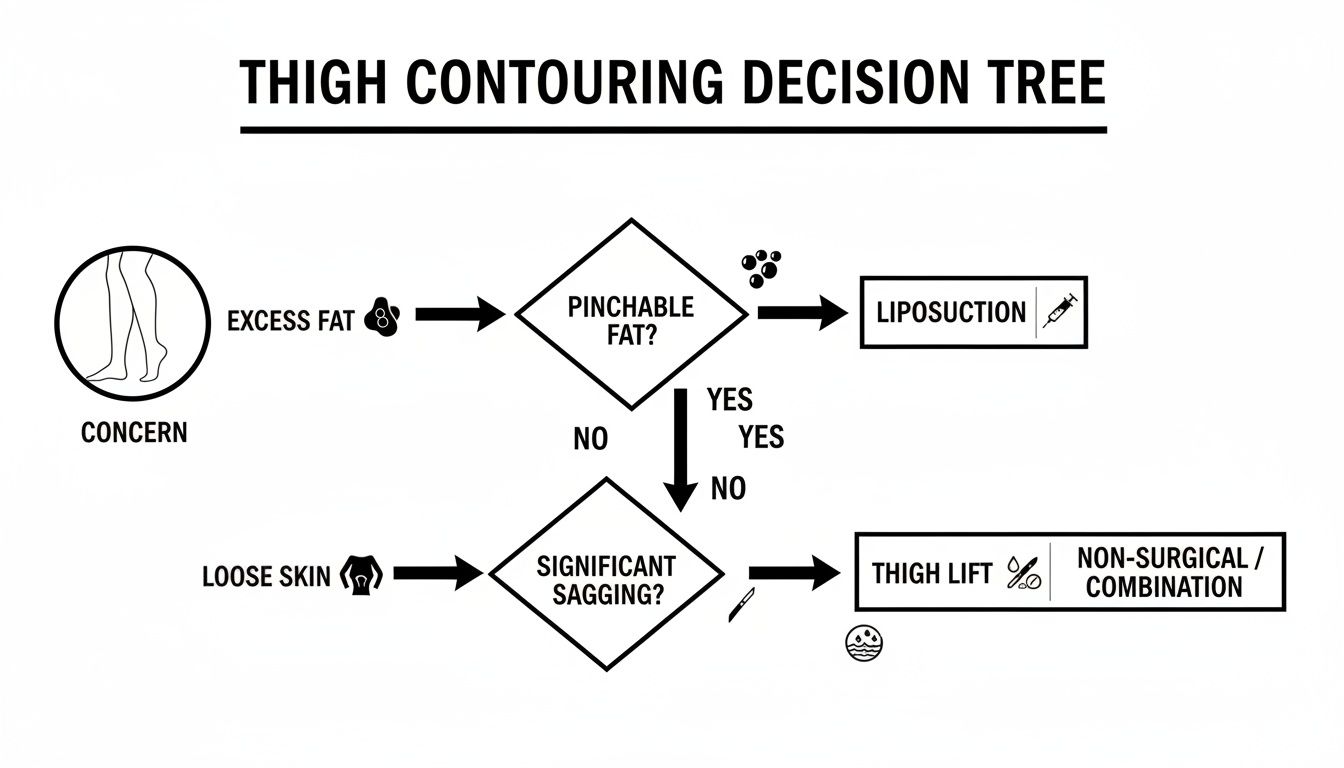
As you can see, the right procedure is always chosen based on whether your main issue is excess fat, loose skin, or a mix of both.
Comparing Inner Thigh Contouring Methods
To help you quickly compare the leading methods, here's a simple breakdown of what each procedure targets, who it's best for, and what to expect for recovery.
| Treatment | Primary Target | Ideal Candidate | Typical Downtime |
|---|---|---|---|
| Liposuction | Excess Fat | Good skin elasticity, localized fat pockets | 1-2 weeks for light activity |
| Thigh Lift | Loose Skin & Excess Fat | Significant skin laxity, often after weight loss | 2-4 weeks for initial recovery |
| CoolSculpting | Small Pockets of Fat | Good skin elasticity, wants non-surgical option | Minimal to no downtime |
| Exercise/Diet | Overall Fat Reduction | Anyone wanting to improve overall body composition | N/A |
This table serves as a starting point. A one-on-one consultation is the only way to determine the ideal approach for your specific anatomy and goals.
Integrating Skin Tightness for Optimal Results
While removing unwanted fat is a huge part of the process, the final look of your thighs depends heavily on your skin's quality. If the skin doesn't "snap back" after the fat is gone, the contour might not look as smooth or defined as you hoped.
A truly successful thigh contouring result addresses both volume and skin tone. Neglecting skin laxity can lead to a deflated or wrinkled appearance, even if the underlying fat is gone.
This is why a comprehensive plan is so important. Beyond just removing fat, achieving a truly great result often means addressing skin laxity. There are many complementary skin tightening procedures that can enhance your outcome. Taking this holistic view ensures your treatment plan accounts for all the factors that create a beautifully refined, natural look—giving you results you’ll love for years.
Surgical Options for Definitive Results
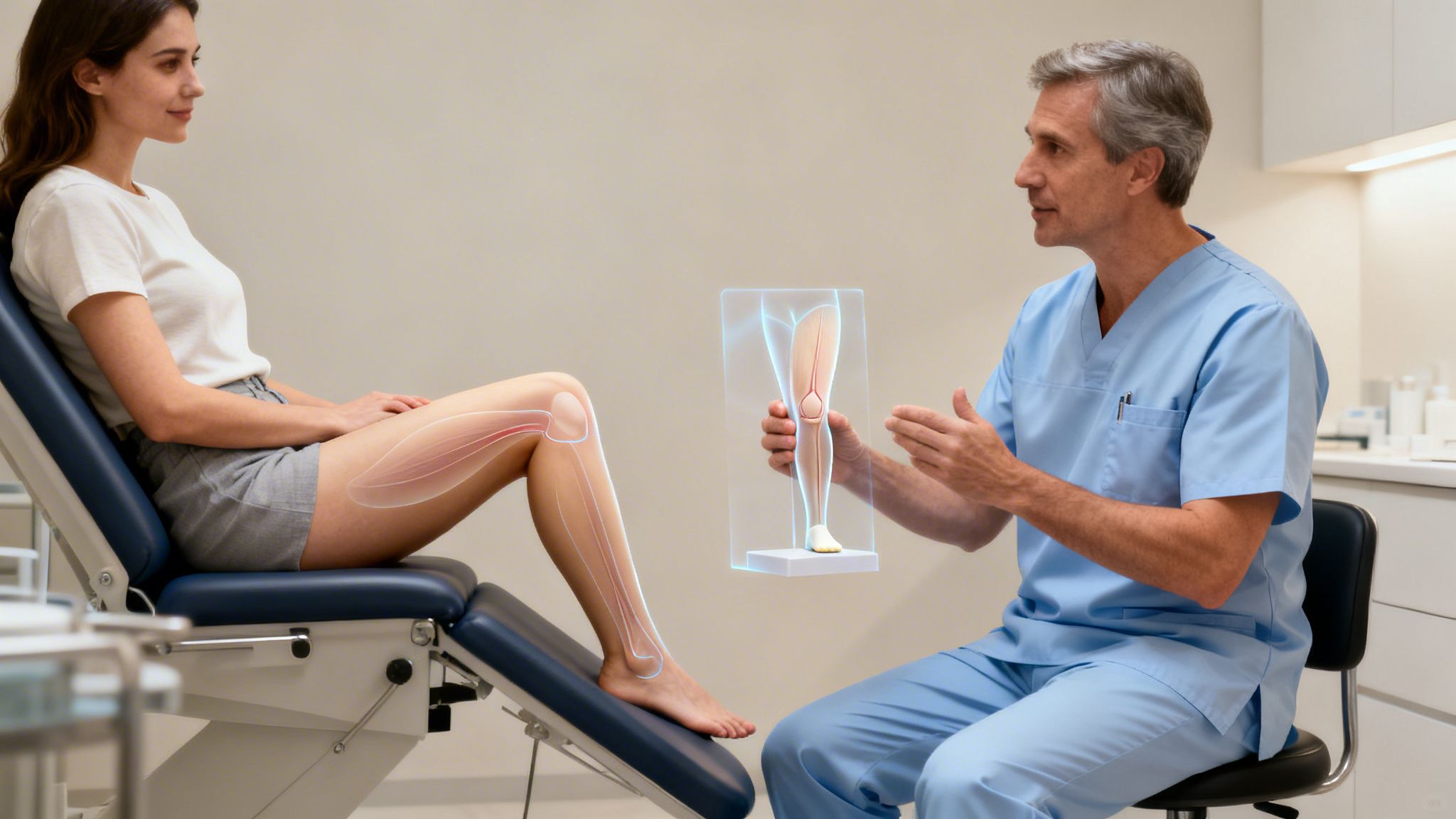
When you’ve put in the work with diet and exercise but still can’t get the thigh shape you want, it’s time to consider other options. Surgical procedures offer a direct and powerful way to achieve significant, lasting change. These aren't just about fat removal; they're about skillfully sculpting your legs for a more balanced and refined contour.
For most people focused on removing stubborn inner thigh fat, liposuction is the go-to surgical solution. It’s a powerful body contouring tool a surgeon uses to carefully remove localized fat deposits that have resisted all your efforts. The goal is to reveal the smoother, more defined shape you've been working toward.
It's crucial to understand that liposuction only removes fat. It doesn't tighten loose skin. This is a key distinction, especially for patients who already have good skin quality and elasticity.
Liposuction: The Fat Sculpting Solution
Liposuction is an excellent choice for individuals who are at or near their ideal weight but are bothered by specific pockets of fat on their inner thighs. The procedure is straightforward: small, hidden incisions are made, and a thin tube called a cannula is used to suction out the unwanted fat cells for good.
- Who is a good candidate? Patients with firm, elastic skin and specific, localized fat deposits tend to see the best results. Their skin can retract smoothly over the new, slimmer contour once the fat is gone.
- What is the goal? The main objective is to reduce volume, eliminate uncomfortable chafing, and create a more streamlined leg silhouette. While some patients hope for a "thigh gap," the primary aim is always to achieve a natural and proportionate shape.
Because it directly targets fat cells, liposuction is incredibly effective for inner thigh fat removal. Modern techniques, such as laser-assisted liposuction, can make the procedure more efficient with less downtime. You can learn more about these advanced techniques in our guide to Smart Liposuction.
Thigh Lift: The Skin Tightening Solution
But what if your problem isn't just fat, but also loose, sagging skin? This is a common issue after major weight loss, pregnancy, or simply as a result of aging. For this, a thigh lift, or thighplasty, is the definitive answer.
A thigh lift accomplishes what liposuction can’t: it surgically removes the excess, drooping skin and tightens the remaining tissue. This restores a firm, smooth contour to the thigh. You can think of it like tailoring a piece of clothing that has become too loose; the excess "fabric" is trimmed away to create a perfect fit.
The procedure often includes some liposuction to remove any remaining pockets of fat, delivering a comprehensive rejuvenation of the inner thighs. Its effectiveness is why demand continues to grow. The American Society of Plastic Surgeons reported that over 9,000 thigh lift procedures were performed in 2020 alone, highlighting a clear trend in body contouring.
A thigh lift tackles both excess fat and loose skin, making it the gold standard for patients needing a complete inner thigh transformation. It creates a tauter, more youthful look that liposuction alone simply cannot deliver.
Combining Procedures for a Complete Transformation
For many patients, the best possible outcome comes from combining a thigh lift with liposuction. This two-pronged approach allows a surgeon to tackle both volume and skin laxity in one operation, producing a truly refined result.
Every procedure is customized to your unique anatomy and goals. Your surgeon will determine the best incision pattern to remove the maximum amount of skin while keeping scars as hidden as possible. Incisions are usually placed in the groin crease, but in cases of significant sagging, they may need to extend down the inner thigh.
By combining these powerful techniques, a skilled, board-certified plastic surgeon can effectively resolve chafing, improve how your clothes fit, and give you a thigh shape you can feel confident in. The first step is a personal consultation to figure out if you need fat reduction, skin tightening, or a combination of both to achieve your ideal look.
Non-Surgical Inner Thigh Fat Reduction
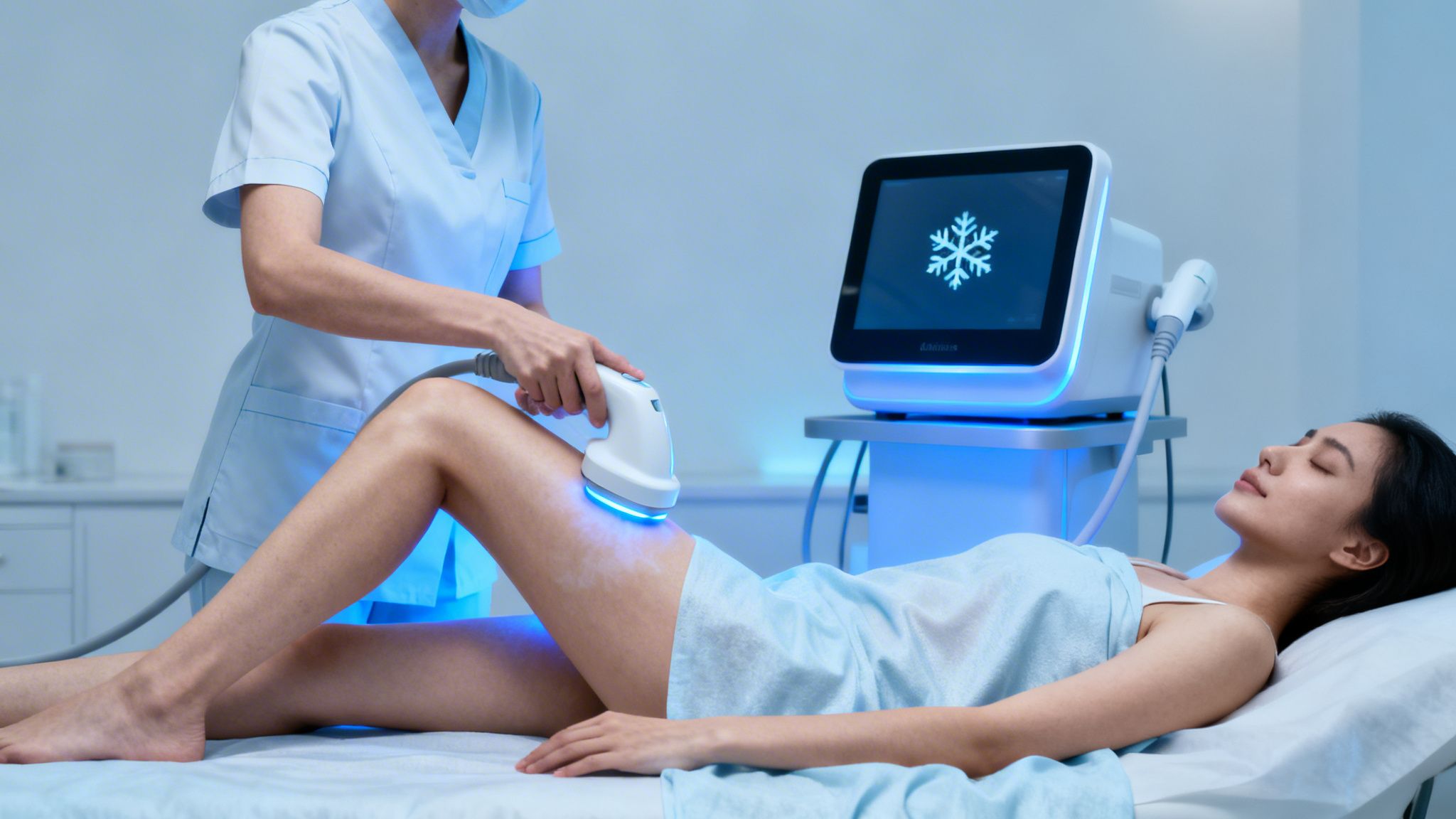
If you're looking for a way to slim your inner thighs without the downtime of surgery, non-invasive procedures are an excellent alternative. These treatments are specifically designed to target smaller, stubborn pockets of fat and help refine the contour of your legs.
One of the most effective and popular options is CoolSculpting, an FDA-cleared treatment that uses a process called cryolipolysis. In simple terms, it's a method of freezing fat away.
The science behind it is fascinating. CoolSculpting delivers precisely controlled cold to the inner thighs, chilling the fat cells just beneath the skin's surface. These targeted fat cells crystallize and die off. Over the next few weeks and months, your body naturally processes and clears away these dead cells for good, leaving behind a slimmer, more sculpted thigh.
How CoolSculpting Works for Inner Thighs
A CoolSculpting treatment for the inner thighs is quite straightforward. First, a gel pad is placed on the treatment area, followed by the applicator. As the device starts delivering its cooling energy, you'll likely feel a few minutes of intense cold and a slight pulling sensation. This feeling quickly fades as the area becomes numb.
During your session, you're free to relax, read a book, or even take a nap. Each treatment targets a specific zone, and we create a custom plan based on your unique anatomy and goals.
It's crucial to have realistic expectations. CoolSculpting is a body contouring tool for fat reduction, not a weight-loss method or a skin-tightening procedure. It works best on people who are already near their ideal weight but have pinchable bulges of fat that won't budge.
While CoolSculpting is brilliant for reducing fat, it won't address loose skin. If you have concerns about skin laxity, you may want to explore complementary treatments. You can learn more about the benefits of non-surgical skin tightening to help firm up the area after fat reduction.
Who Is an Ideal Candidate?
Figuring out if CoolSculpting is the right choice for you comes down to your body and your aesthetic goals. It’s not just about wanting to get rid of fat; it’s about having the right type of fat and skin condition for the technology to deliver the best results.
You might be a good candidate for CoolSculpting if:
- You have distinct, "pinchable" pockets of fat on your inner thighs.
- Your skin still has good elasticity and isn't overly loose.
- You are close to your goal weight and maintain a healthy lifestyle.
- You strongly prefer a non-surgical approach with zero downtime.
On the other hand, if you have a larger amount of excess fat or significant skin sagging, a surgical procedure like liposuction or a thigh lift will likely provide a more dramatic and satisfying outcome. A one-on-one consultation is the best way to determine which path truly aligns with the results you're hoping for. For optimal results, most patients need one to three CoolSculpting sessions per area, spaced several weeks apart to give your body time to naturally eliminate the treated fat cells.
What to Expect: The Procedure and Your Recovery
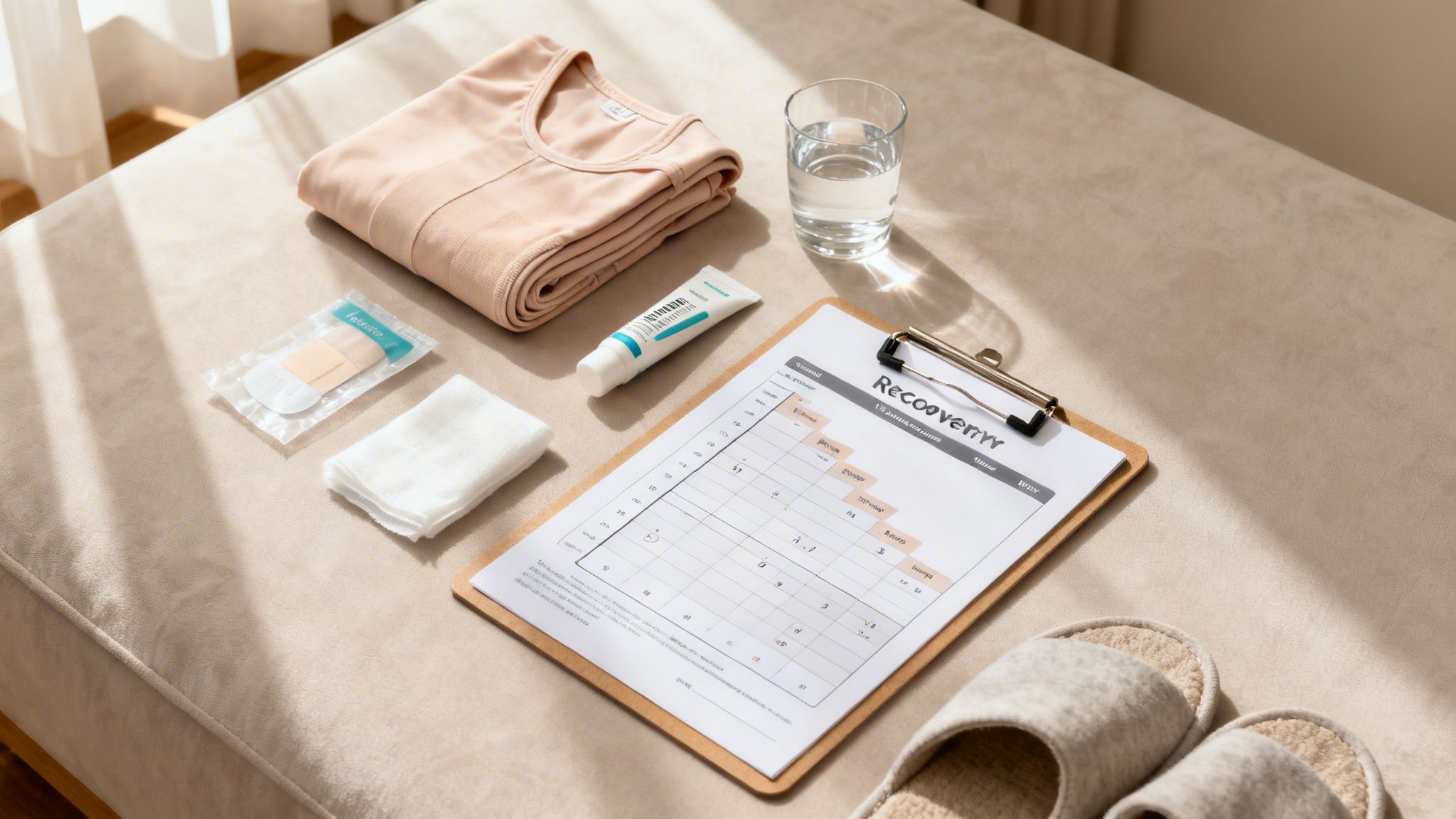
Knowing exactly what’s going to happen before, during, and after your procedure is the best way to quiet any pre-surgery jitters. It’s completely normal to feel a bit anxious about the unknown, but having a clear game plan makes all the difference. Let's walk through the entire process, from the day of surgery to your final, beautiful results.
On the day of your liposuction or thigh lift, you'll meet with your surgeon and the anesthesia team to go over the plan one last time. We’ll make sure all your questions are answered. Depending on the extent of your inner thigh fat removal, we'll use either general anesthesia or local anesthesia with sedation to keep you completely comfortable and pain-free.
After the procedure is finished, you’ll spend a bit of time in a recovery suite where our medical staff will monitor you closely. You can expect some soreness, swelling, and bruising—this is a normal part of the healing process. We manage this with a personalized aftercare plan and pain medication. Most patients are able to go home the very same day, but you will need a friend or family member to drive you.
The First Few Weeks: A Recovery Timeline
Recovery is a step-by-step process, and many patients are pleasantly surprised by how quickly they can get back to their normal lives. Your own experience will depend on the specifics of your surgery, but this general timeline will help you know what to expect. Think of that first week as your dedicated healing time, where rest is your number one job.
Here’s what a typical recovery looks like:
- Week 1: This is when you’ll focus on rest. Swelling and bruising will be at their most noticeable. You’ll be wearing your compression garment around the clock to help shape your new thigh contour and reduce fluid buildup. We encourage gentle walking to keep your circulation moving, but any and all strenuous activity is off the table. Many patients feel ready to work from a desk at home after just a few days.
- Weeks 2-3: The swelling starts to go down quite a bit, and you’ll begin to see the early contours of your slimmer thighs. You can usually get back to light activities and may be able to return to an office setting. You’ll still be wearing your compression garment, but we may adjust how often you need it.
- Weeks 4-6: At this stage, you’re often cleared to resume most of your regular exercise routine. Any discomfort should be mostly gone, and the vast majority of swelling will have subsided. This is when the results really start to shine through and become more defined.
The key to a smooth, complication-free recovery is to follow your surgeon's post-operative instructions to the letter. This means taking your medications on schedule, never missing a follow-up appointment, and listening to what your body is telling you.
Simple Tips for a Better Recovery
A fantastic final result is a partnership between you and your surgeon. While the surgery happens in a pristine medical setting, what you do at home during your recovery is just as important. For more on what to expect from a top-tier facility, our guide on how to choose the right liposuction clinic also details the importance of post-operative care.
To make sure you heal comfortably and beautifully, focus on these essentials:
- Wear Your Compression Garment: This garment will be your best friend. It’s not just about controlling swelling; it’s critical for helping your skin tighten and adapt to its new, sleeker shape. Wear it exactly as we instruct you.
- Take Care of Your Incisions: Keeping the small incision sites clean and dry is the best way to prevent infection and ensure your scars heal as discreetly as possible. We will give you very specific instructions on how to do this.
- Fuel Your Body for Healing: Eating a healthy diet full of protein, vitamins, and minerals gives your body the tools it needs to repair tissue. Drinking lots of water is also key, as it helps to flush out excess fluid and bring down swelling.
- Move, But Gently: While you have to avoid the gym, light walking is incredibly important. It helps prevent blood clots and actually speeds up your healing by boosting circulation.
Understanding Risks and Ensuring Your Safety
Any conversation about surgery has to include a frank discussion about safety. A great result is only possible when you’re fully informed, and that means understanding the potential risks that come with any medical procedure, including inner thigh fat removal.
Thinking about the risks of cosmetic surgery is a bit like planning a long road trip. You know there's a chance of a flat tire, but you don't cancel the trip. Instead, you make sure the car is serviced by a good mechanic and that you have a spare. In the same way, while complications are possible, they are significantly minimized by choosing the right "mechanic"—a board-certified plastic surgeon operating in a fully accredited surgical facility.
Common Risks and How They Are Managed
Knowing what to look for helps you partner with your surgeon to prevent issues before they start. The most common risks with inner thigh procedures are almost always manageable, and many can be avoided by simply following your post-op instructions.
- Infection: We operate in a sterile environment and often prescribe antibiotics as a safeguard. At home, your job is to keep your incisions clean exactly as instructed. This is the single most important step in preventing infection.
- Asymmetry: The human body is naturally a little asymmetrical. While the goal is to create a balanced, harmonious look, minor differences between the thighs can emerge as you heal. A surgeon’s meticulous technique is your best defense against anything noticeable.
- Excessive Scarring: Scarring is a natural part of any surgical lift, but a good surgeon places incisions in discreet creases where they are easily hidden. We also provide detailed scar care instructions to help them fade over time.
- Contour Irregularities: Some minor lumpiness or dimpling can occur as the swelling goes down and your tissues settle into their new shape. This is why wearing your compression garment is so important—it helps guide your body toward a smooth, even result.
Your surgeon's experience and skill play a huge role in minimizing these risks right from the start.
The Surgeon's Role in Minimizing Complications
The most critical factor for your safety is the surgeon you trust with your procedure. Their technique isn't just about the final look; it directly impacts your risk of complications. How a thighplasty is performed, for example, can make a world of difference.
Research has shown just how much surgical technique impacts patient safety. One major review found that when surgeons combined liposuction with a thigh lift, the overall complication rate was nearly cut in half.
This isn't just a minor improvement; it’s a powerful demonstration of how a surgeon's approach matters. A detailed study of over 1,100 patients showed that adding liposuction to a medial thighplasty dropped the overall complication rate from a staggering 70.68% down to just 36.75%. This method dramatically lowered the incidence of infection, hematoma (blood collection), and seroma (fluid collection). You can read the full research about these thigh lift findings to see the data for yourself.
Your Part in a Safe Recovery
Patient safety is a team effort. Your surgeon is in charge in the operating room, but you are in charge of your recovery. Following your post-operative instructions isn't just a suggestion—it’s absolutely essential for a smooth healing process and for protecting the beautiful results you've invested in.
This means showing up for all your follow-up appointments, taking your medications exactly as prescribed, and being honest with your care team if anything feels off. Your commitment to the recovery plan is the final, crucial piece of the safety puzzle.
Maintaining Your New Thigh Contour
After your procedure, the benefits are both seen and felt. Beyond the immediate visual improvement, inner thigh fat removal brings real, functional changes to your everyday life. Clothes fit better, the painful chafing that made walking or running a chore is gone, and you can finally enjoy the smoother, more defined leg shape you’ve been working towards.
This isn’t just about aesthetics; it’s about feeling more comfortable and confident in your own skin. You’ve made a significant investment in yourself, and now the focus shifts to protecting that result for the long haul.
Protecting Your Investment Long-Term
One of the best things about procedures like liposuction is that the fat cells we remove are gone permanently. However, it's crucial to understand that this doesn't make you immune to future changes. The remaining fat cells in your thighs—and elsewhere on your body—can still expand if you gain a significant amount of weight.
Think of your procedure as giving you the ultimate head start, not a free pass.
Maintaining a stable weight is the single most important factor in preserving your new contour. When your weight is steady, the sleek, sculpted shape you’ve achieved remains consistent. The longevity of these results is well-documented when surgery is paired with a healthy lifestyle. In fact, a major review of thighplasty techniques found results were durable for up to 112 months when patients maintained their weight. Learn more about these long-term findings.
This really highlights the partnership between your surgical outcome and your daily habits.
Lifestyle Strategies for Lasting Results
The key to enjoying your new thigh shape indefinitely is adopting a sustainable approach to your health. This doesn't mean you need to start an extreme diet or a grueling workout plan. It’s all about creating consistent, healthy habits that become a part of your life.
Key Maintenance Strategies:
- Balanced Nutrition: Center your diet around whole foods. Think lean proteins, fresh vegetables and fruits, and whole grains. These give your body the fuel it needs without the excess calories that lead to fat storage.
- Consistent Exercise: A regular fitness routine that mixes cardio (like brisk walking, cycling, or swimming) with strength training is perfect. Cardio helps manage overall body fat, and strength training builds lean muscle, which in turn boosts your metabolism.
- Stay Hydrated: Drinking enough water is fundamental for good metabolic health and can also help you manage your appetite.
- Monitor Your Progress: Keep an eye on how your clothes are fitting and check in on your weight from time to time. This lets you make small adjustments before a minor fluctuation turns into significant weight gain.
Your procedure gives you a new baseline. Your lifestyle choices are what protect and maintain it. Small, consistent efforts are far more effective than short-term, drastic changes.
Beyond just the treated area, understanding how to manage your overall body composition will make a huge difference. Learning how to reduce body fat percentage gives you a complete toolkit for lifelong health, empowering you to protect your beautiful results for many years to come.
Common Questions About Inner Thigh Fat Removal
When you're considering a procedure like inner thigh fat removal, it’s natural to have a lot of questions. Getting clear, straightforward answers is the first step toward making a decision you feel good about. Here, we tackle some of the most common concerns we hear from patients in our Newport Beach office.
How Painful Is Inner Thigh Fat Removal Recovery?
This is one of the first things patients ask, and it's an important one. After a surgical procedure like liposuction or a thigh lift, you can expect some soreness. Most patients describe it as feeling like you had a very intense leg workout.
This discomfort is most noticeable for the first few days, but it’s very manageable. We create a structured aftercare plan that includes prescribed pain medication to keep you comfortable. For non-surgical treatments like CoolSculpting, the feeling is much milder—some temporary tingling, numbness, or a deep cold sensation that goes away quickly. Your comfort is our priority, and we'll have a detailed pain management strategy in place for you.
Will I Have Noticeable Scars After a Thigh Lift?
Any time a surgical incision is made, a scar will form. But the art of plastic surgery is making those scars as discreet as possible. For an inner thigh lift, I place incisions strategically in the natural crease of the groin. If a vertical incision is needed, it runs along the inner thigh where it’s less conspicuous.
While scars are permanent, they don't have to be prominent. With the right care, they typically fade significantly over the first 12-18 months, eventually becoming fine, flat lines.
During your consultation, I’ll show you exactly where the incisions for your specific anatomy would be placed. You’ll also go home with a dedicated scar care protocol, which often includes silicone sheets or creams to help your scars heal beautifully.
Should I Get This Procedure If I Plan to Lose More Weight?
This is a critical question. The answer I give my patients is almost always the same: you should be at or very near your stable, ideal weight before having any body contouring procedure. Significant weight changes after surgery can undo your beautiful new contours.
Think of it like this: I am sculpting your final shape. If you lose a large amount of weight after the fact, you could end up with new areas of sagging skin, which would alter the smooth silhouette we worked to create. Getting to your goal weight first means I can remove the precise amount of fat and skin needed for a fantastic, long-lasting result.
How Much Does Inner Thigh Fat Removal Cost?
The cost for inner thigh contouring can vary quite a bit, as every patient’s body and goals are different. The final price tag really depends on a few key factors:
- The type of procedure: A surgical thigh lift is a more involved operation and will be a larger investment than liposuction on its own.
- The complexity of your case: The surgical time required depends on the amount of fat and skin we need to address.
- The surgeon’s expertise: The experience of a board-certified plastic surgeon is reflected in the quality of the result and the cost.
- Non-surgical options: Treatments like CoolSculpting are typically priced per session, and you may need a series of treatments to reach your goal.
You will receive a clear, all-inclusive price quote during your personal consultation. We also provide information on financing options to help make your desired procedure more accessible.
At Michael A. Bain, MD, my goal is to make sure you feel confident and completely informed at every stage of your journey. If you’re ready to learn more about how we can achieve the thigh contour you’ve been wanting, I invite you to schedule a personal consultation at our Newport Beach office. Visit us at https://www.drbain.com to get started.