

Once your rhinoplasty is complete, the focus immediately shifts to your recovery. This initial period is all about managing the expected swelling, stuffiness, and early discomfort as your body begins to heal. Your first day will be dedicated to resting with your head elevated, sticking to soft foods, and using the medication we’ve prescribed, all while a protective cast shields your new nose.
The First 24 Hours After Your Rhinoplasty
The moment you wake up from anesthesia, your recovery journey has officially begun. While surgery naturally makes people think of "pain," most of our patients actually describe the feeling differently. It’s more of a significant pressure and stuffiness, much like you’d feel with a bad head cold. This sensation is completely normal and is simply the result of internal swelling and the supportive splints placed inside your nose.
Think of the external cast on your nose as its personal bodyguard for the first week. We custom-mold it to keep the delicate bone and cartilage structures perfectly stable as they start to mend. This cast is crucial for protecting your nose from any accidental bumps and ensuring everything holds its new, refined shape.
Your Immediate Post-Op Priorities
During these first 24 hours, your main job is to rest and create the best possible environment for healing. Your post-operative instructions are your guide, but they all boil down to a few key actions.
First and foremost is managing any discomfort. You’ll go home with prescriptions for pain medication, and it's important to stay on top of the schedule. Don't wait for discomfort to build up before taking it; staying ahead of it will help you relax and rest much more effectively.
Next, you need to pay close attention to your positioning. Keeping your head elevated above your heart is absolutely non-negotiable.
Pro Tip: For the first few nights, prop yourself up on two or three pillows or, even better, sleep in a recliner. This simple trick uses gravity to your advantage, making a huge difference in minimizing swelling and bruising around your cheeks and eyes.
Eating and Relying on Help
You can expect your energy levels to be low as you recover from the anesthesia. This is why having a dedicated helper for the first day or two is so important. This person can bring you food, water, and medication, freeing you up to focus completely on resting.
When it comes to your diet, stick with soft, easy-to-chew foods. Good options include:
- Yogurt and smoothies
- Applesauce or pudding
- Soup or broth
- Mashed potatoes
You'll want to avoid hard, crunchy, or very hot foods for now. They require more effort to eat and can cause unnecessary discomfort around your nose and mouth.
Finally, a bit of minor bleeding is common in the first 24-48 hours. We’ll often tape a small gauze pad, or a "drip pad," under your nostrils to catch any light oozing. This is perfectly normal and usually stops very quickly. For more in-depth advice on this, learning how to care for an incision after surgery can give you extra confidence. Following these initial steps carefully will set a strong foundation for a smooth and successful recovery.
Your Week-By-Week Rhinoplasty Recovery Timeline
Healing from a nose job is a journey of patience, not an instant reveal. I tell all my patients that understanding the typical progression is the key to setting realistic expectations and appreciating the small, steady improvements. Think of your recovery as a timeline, with major milestones that mark your progress from the first few days all the way to your final, settled result.
The first week is often the toughest, both physically and emotionally. You'll be doing a lot of resting, managing discomfort with the medication we provide, and probably feeling very eager for that first big milestone.
Week 1: The Big Reveal
The first few days after your surgery are all about managing swelling and bruising. This is completely normal; it’s your body's natural response to the work we've done. I often describe the swelling as a protective cushion your body builds around the delicate, healing tissues. You can expect this puffiness to peak around day three.
Then comes the moment you’ve been waiting for. Around day seven, you'll come back to our Newport Beach office for your cast removal. Seeing your new nose for the first time is an incredible moment, but it's so important to remember that what you see is just a preview. It’s a swollen version of the final product, not the final product itself.
Your nose will look wide, the tip might seem overly upturned, and the overall shape won't have much definition yet. This is 100% normal and something every patient experiences. The beautiful, refined shape we created is hiding underneath, just waiting for that swelling to go down.
The First Month: Swelling Starts to Fade
During the second and third weeks, you’ll see the most dramatic drop in both swelling and bruising. The "black eyes" that can show up after rhinoplasty will fade away, and you'll start to look and feel much more like yourself again. While you might still feel a bit self-conscious, most of my patients feel comfortable returning to work and their social lives during this period.
By the end of the first month, about 70% of the swelling has typically resolved. You’ll notice the bridge of your nose looks much more defined. The tip, however, will still feel firm and look a bit bulbous. This is because the skin on the nasal tip is the thickest, and it simply holds onto swelling longer than any other part of the nose.
Months 2 to 3: Breathing and Definition Improve
As you head into the second and third months, your recovery shifts into a new phase of refinement. The internal swelling has gone down enough that your breathing should start to feel significantly clearer—often even more open than it was before your surgery.
Externally, the improvements just keep coming. The nasal tip begins to relax and "drop" into its final, more natural position. The underlying cartilage and bone structure we sculpted become more visible. This is when you really start to see the elegant details and sophisticated changes taking shape. For a deeper look at this process, our guide on how long swelling lasts after a nose job breaks it down even further.
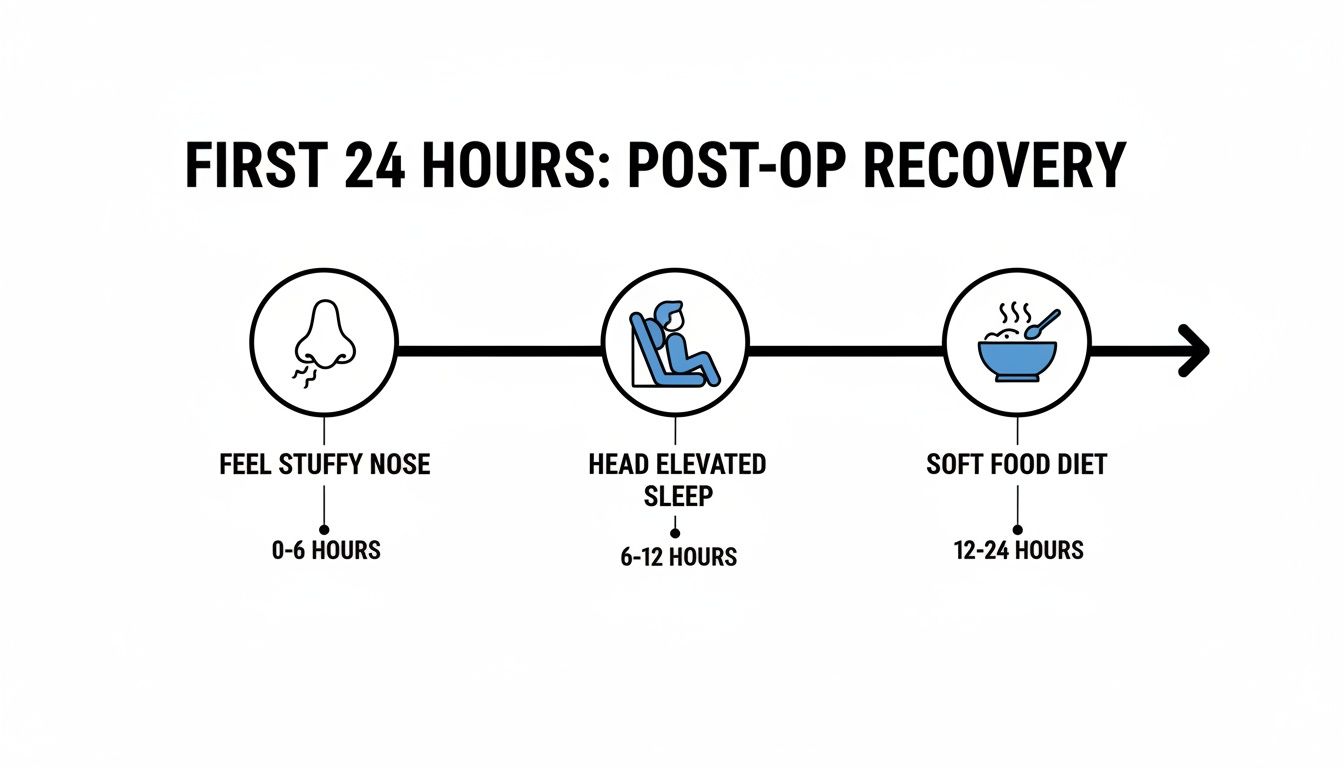
To help you visualize the journey, here’s a quick summary of what to expect at each stage.
Rhinoplasty Recovery Timeline At A Glance
This table breaks down the key milestones and expectations, from the initial recovery period to seeing your final result.
| Timeframe | Key Events & Sensations | Activity Level |
|---|---|---|
| Week 1 | Peak swelling and bruising. Cast and splint are on. Nasal congestion. | Strict rest. No strenuous activity. Sleep with head elevated. |
| Week 2 | Cast removed. Most bruising fades. Swelling starts to decrease noticeably. | Return to desk work is okay. Light walking permitted. No heavy lifting. |
| 1 Month | About 70% of swelling is gone. Bridge looks defined, but tip is still swollen. | Can resume most non-contact activities and light exercise. |
| 3 Months | Breathing improves significantly. Tip begins to drop and refine. Most swelling is gone. | Okay to resume more strenuous exercise. Still avoid contact sports. |
| 6 Months | Nasal contours and tip definition continue to improve. Most changes are now subtle. | Most restrictions are lifted. The nose is stronger. |
| 1 Year | Final 10-15% of swelling has resolved. Tissues are soft. Final result is visible. | No restrictions. The healing process is complete. |
This timeline provides a great road map, but remember that every patient's healing journey is unique.
6 Months to 1 Year: The Final Result Is Revealed
The period from six months to one full year is all about those final, subtle refinements. The last 10-15% of swelling, which is almost entirely in the nasal tip, slowly disappears. This minor residual swelling is often invisible to others, but it’s something you and I will be able to see as it gradually resolves.
At the one-year mark, your healing is considered complete. The tissues are fully settled and soft, and the result you see in the mirror is the beautiful, permanent outcome you’ve been patiently waiting for. This is the goal we work toward from day one.
How to Manage Swelling, Bruising, and Discomfort
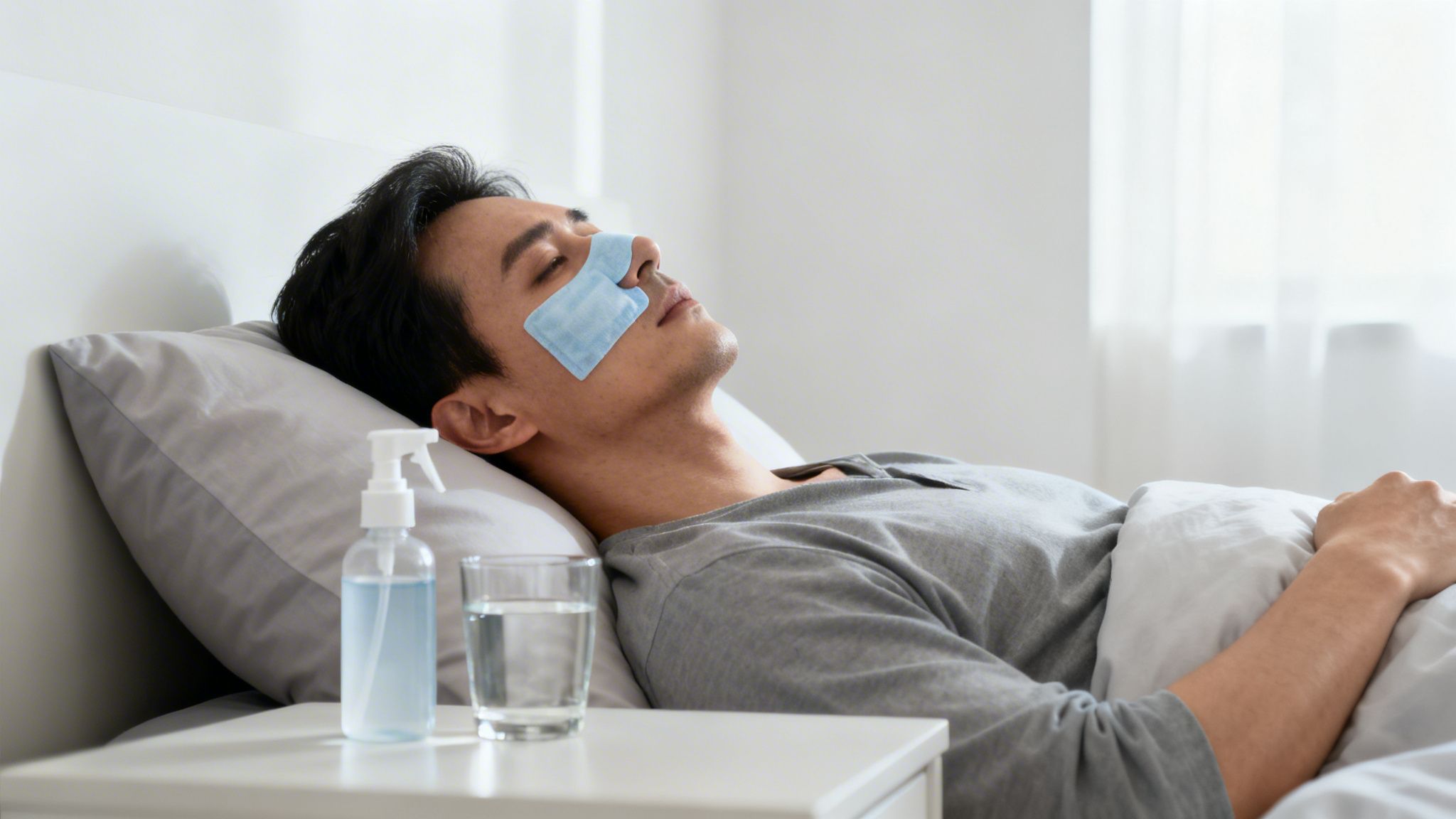
Swelling and bruising are the most visible signs that your body is healing, and being proactive about managing them can make a huge difference in your comfort. Think of it as your body's natural construction crew rushing to the site; it sends in fluids to protect the area while it rebuilds. This is a completely normal and necessary part of the process.
You can expect the swelling and bruising to be at their most noticeable during the first 2 to 3 days. Your nose, cheeks, and the area under your eyes will likely look quite puffy. This is the peak, and things will start to improve quickly from here.
Controlling Swelling From Day One
A few simple, old-fashioned strategies are your best bet for getting swelling under control. The single most important thing you can do is keep your head elevated above your heart at all times, especially when you sleep. Gravity is your best friend here, as it helps drain fluid away from your face.
Cold compresses are another key tool, but you have to use them correctly for them to be both safe and effective.
- Placement: Only apply the compresses to your cheeks and around your eyes. Never put them directly on your nose or the cast. The skin is far too delicate, and the cast needs to remain undisturbed.
- Application: Stick to a strict schedule of 20 minutes on, 20 minutes off. This prevents any risk of damaging the skin from too much cold.
- Timing: This is most crucial during the first 48-72 hours post-surgery, which is when the swelling response is most active.
Finally, what you eat and drink really matters. Salty foods make your body hold onto water, which can make swelling worse. For the first few weeks, try to stick to a low-sodium diet and drink plenty of water to help your system naturally flush everything out.
From Pain to Pressure and Discomfort
While many people worry about intense pain after surgery, most of my Newport Beach patients describe the feeling after rhinoplasty differently. It's less about sharp pain and more about a significant feeling of pressure, stuffiness, and general discomfort. This is caused by a combination of the internal swelling and the splints supporting your new nasal structure.
You will have medication to manage this, and it’s important to stay on schedule, particularly for the first few days. Don't wait for the discomfort to become intense; staying ahead of it is the key to resting comfortably, which is critical for healing. After a few days, most patients find they can switch over to over-the-counter options as needed. You can find more detail in our guide on how to manage pain after surgery.
Handling Nasal Congestion
A stuffy nose is simply part of the deal in early recovery. The internal swelling can make you feel completely congested, forcing you to breathe through your mouth. It's temporary and gets so much better after we remove your internal splints, which usually happens after about one week.
A Patient Perspective: "The stuffiness was the most annoying part for me. I felt like I had the world's worst cold for a few days, but sleeping in my recliner and using saline spray as instructed made a huge difference. Once the splints came out, it was like a breath of fresh air—literally."
While you're feeling congested, be sure to follow your specific post-op instructions for using saline sprays. You may also find it helpful to look into other general ways to alleviate a stuffy nose. Just remember that your nose is extremely delicate right now, so absolutely no forceful nose-blowing until you get the all-clear from me.
Resuming Your Life and Activities Safely
Understanding when and how to get back to your normal routine is a major part of the rhinoplasty recovery process. I always tell my patients that pushing it too soon can compromise the final result. A conservative, patient approach is always the best way forward.
Think of your nose in the first few weeks like a delicate sculpture that's still setting. Protecting it is absolutely essential for achieving the final shape we worked so carefully to create.
While your first week is all about rest, many people are surprised at how quickly they can start feeling more like themselves. In fact, studies show patients often feel ready to resume their usual daily routines within about 4.1 days. For my patients with desk jobs, this often means they're comfortable returning to work in about a week, especially after we remove the external cast. You can read more about what the data shows in these rhinoplasty recovery statistics and patient satisfaction reports.
Getting Back to Your Daily Routine
Once you are home, a few simple care routines will become your new normal. Our top priority is keeping your nasal passages clean and moist. We will show you exactly how to do this, from gently cleaning around your nostrils with a hydrogen peroxide solution to applying antibiotic ointment to prevent infection and soften any crusting.
Using a sterile saline nasal spray is another cornerstone of proper care. You'll spray this into your nostrils several times a day. This simple step helps to:
- Wash away any dried blood and mucus.
- Keep the internal tissues from getting uncomfortably dry.
- Gently clear congestion without the risks that come from nose-blowing.
This routine not only makes you feel much more comfortable but also creates the ideal environment for your nose to heal from the inside out.
Crucial Reminder: You absolutely must not blow your nose for at least 2 to 3 weeks after your surgery, and sometimes longer. The pressure can easily disrupt the healing tissues and cause bleeding. If you have to sneeze, open your mouth to let the pressure out.
The Return to Exercise and Physical Activity
While you can get back to light daily tasks pretty quickly, returning to your exercise routine requires much more patience. Getting your heart rate up increases your blood pressure, which in turn increases swelling and the risk of a nosebleed. We have to avoid this to protect the delicate work we've done.
For the first two weeks, the only physical activity I want you doing is light walking. It’s great for circulation, but anything more strenuous is completely off-limits.
Around the 3 to 4 week mark, you can start to slowly bring more cardio back into your life. This could be using an elliptical, riding a stationary bike, or going for a brisk walk. High-impact exercises and any heavy lifting are still strictly forbidden.
Navigating Key Restrictions
Beyond exercise, there are a few non-negotiable rules you must follow to protect your new nose. Following these instructions is critical for a successful recovery and an excellent outcome.
One of the most important rules is about your eyewear. Any glasses or sunglasses that rest on the bridge of your nose are forbidden for at least 4 to 6 weeks. The pressure, no matter how light it seems, can actually create indentations in the healing nasal bones and cartilage, compromising your final result.
Sun protection is another crucial factor. After surgery, the skin on your nose is extremely sensitive to the sun. Sun exposure can cause a nasty burn, and it can also increase and prolong swelling. For the first few months, make it a habit to wear a wide-brimmed hat and apply a broad-spectrum SPF 30+ sunscreen anytime you're outside. Protecting your investment from the sun is a simple but powerful step toward achieving that beautiful final result.
The Emotional Side of Recovery and Your Final Result

The path to your final rhinoplasty result is as much an emotional journey as it is a physical one. We've guided countless patients through this, and it's completely normal to feel a mix of excitement, impatience, and even some anxiety as your body heals.
One day, you might feel thrilled about the future, and the next, you might feel a bit discouraged by the swelling. These ups and downs are a standard part of the process for nearly every patient who walks through our doors.
Navigating the "Mirror Checking" Phase
After your cast comes off, it’s only natural to want to constantly check your reflection, analyzing every little change. We see this all the time—it's a common but stressful habit that we call the "mirror checking" phase.
You have to remember that the nose you see from one day to the next is not a true reflection of the final outcome. Swelling fluctuates constantly, influenced by everything from your diet to how you slept the night before. Obsessing over these minor, daily shifts will only create unnecessary worry.
The nose you see right after the cast is removed is just a preview, not the final show. It's a swollen, temporary version of the beautiful result that is still taking shape underneath. Trusting the process is far more productive than over-analyzing daily changes.
Understanding that everyone's healing is unique and learning to manage your expectations is crucial. For more insight on this, it can be helpful to read about why expectations can sometimes hinder your happiness. This perspective is incredibly useful as you navigate your recovery.
Patience and the Final Unveiling
The most important virtue during rhinoplasty recovery is patience. Your nose will continue to refine and settle for a full year, sometimes even longer. The most delicate changes happen in the last few months as that final bit of swelling in the tip disappears. It truly is a marathon, not a sprint.
Staying positive during this time can be challenging, but focusing on the long-term goal is key. Here’s what we advise our patients to help maintain a positive outlook:
- Avoid Comparisons: Your healing process is entirely your own. Comparing your progress to photos of others online can be misleading and unhelpful.
- Focus on Milestones: Celebrate the small victories, like when the bruising fades or when you can breathe more easily through your nose again. Don't focus only on the final look.
- Stay Connected: Keep your follow-up appointments and please, communicate any concerns with our team. We are here to support you every step of the way.
It can also be reassuring to focus on the high rates of success associated with this procedure. When performed by a skilled, board-certified surgeon, patient satisfaction is exceptionally high. Data shows an 83.6% satisfaction rate among patients on social media, and board-certified surgeons consistently achieve success rates between 85-90%.
As the months pass, you will see your new nose emerge, bringing your facial features into a beautiful new harmony. Trusting the timeline and embracing patience will ensure your emotional journey is as successful as your surgical one.
Common Questions About Rhinoplasty Recovery
Having questions during your rhinoplasty recovery isn’t just common; it’s a completely normal part of the process. As your body begins to heal, you’re going to notice all sorts of changes that can feel a bit confusing or even concerning at first. We’ve put this guide together to give you clear, straightforward answers to the questions we hear most often from our Newport Beach patients, offering some peace of mind for your healing journey.
Knowing what to expect after your surgery helps you stay calm and focused on what really matters: your recovery. We've compiled answers to address the most pressing concerns, from breathing and swelling to activity restrictions and potential warning signs.
When Will I Be Able to Breathe Normally Through My Nose Again?
Nasal stuffiness is a universal and temporary experience after every rhinoplasty. For the first few days, you'll have a combination of internal swelling and supportive splints that will make breathing through your nose feel difficult, if not impossible. This is completely normal; you will become a temporary "mouth breather."
The first major improvement usually comes after about one week when we remove your internal splints. That moment often brings a huge sense of relief. From that point on, your breathing will get progressively better week by week as the internal swelling continues to go down.
Think of it like a path that's been blocked by a pile of leaves; week by week, that path is slowly cleared until it's completely open again. Using your prescribed saline spray is absolutely essential during this time. It helps keep your nasal passages moist, gently clears away any crusting, and just helps you feel more comfortable much faster.
My Nose Looks Too Wide or Upturned—Is This Permanent?
Absolutely not. This is probably the single most common anxiety we see in patients, especially in those first few weeks, and the answer is always that it is not permanent. Immediately after your cast comes off, your nose is going to look wider, more swollen, and more upturned than you anticipated.
This look is 100% due to post-surgical swelling, not the final shape of your nose. The nose you see at one week is a temporary, "puffy" version of the beautiful final product. The swelling acts like a camouflage, hiding the refined structure we created underneath.
The nasal tip, in particular, is notorious for holding onto swelling the longest. It will gradually "drop" and settle into its intended, natural position over the coming months. Patience is your most important tool during this phase. The elegant shape you want is there; it just needs time to be unveiled.
What Are the Most Important Warning Signs to Watch For?
While complications after rhinoplasty are rare, being informed empowers you to be an active partner in your own care. Your safety is our highest priority, and quick communication is the best way to handle any potential issues that might arise.
You should contact our office right away if you experience any of the following:
- A fever higher than 101°F (38.3°C), as this can be a sign of infection.
- Bleeding that is bright red and continuous. Some light pinkish oozing on the drip pad for the first 48 hours is normal, but active, steady bleeding is not.
- Severe or worsening pain that isn’t managed by your prescribed medication. Your discomfort should gradually improve day by day, not get worse.
- Signs of infection at an incision site, such as spreading redness, significant warmth to the touch, or any pus-like discharge.
Trust your instincts. If something feels off or you are worried, it is always better to call and get reassurance or guidance. We are here to support you and ensure any potential issue is handled swiftly and effectively, protecting both your health and your surgical results.
How Soon Can I Wear My Glasses or Sunglasses?
This is a non-negotiable rule that is critical for proper healing and getting the best possible outcome. After surgery, the nasal bones are very delicate and need time to set firmly without any external pressure.
You must avoid wearing any type of glasses or sunglasses that rest directly on your nasal bridge for at least 4 to 6 weeks. Your surgeon will be the one to give you the final green light at one of your follow-up appointments.
The pressure from glasses, even if they feel light, can create small indentations or even shift the healing bones and cartilage. This could permanently alter the final shape of your nose. To get around this restriction, you have a few options:
- Tape Them Up: You can use a small piece of medical tape to secure your glasses to your forehead, allowing them to "float" just above your nasal bridge.
- Use a Support Device: There are commercially available devices like the "Glasses Gapper" or "NoseComfort" designed specifically for this purpose.
- Switch to Contacts: For those who wear contact lenses, you can typically resume using them within just a few days of your surgery.
Following this rule diligently is one of the easiest ways you can help protect the meticulous work performed during your surgery and ensure your results are everything you hoped for.
At Michael A. Bain, MD, we believe a well-informed patient is a confident and comfortable one. If you have more questions or are considering rhinoplasty in the Newport Beach area, we invite you to schedule a personal consultation to discuss your goals. Learn more about our approach to natural, beautiful results by visiting us at https://www.drbain.com.