

Embarking on your tummy tuck journey with a skilled surgeon like Dr. Michael A. Bain is the first step toward achieving your aesthetic goals. However, the success and quality of your final result are profoundly influenced by what happens after you leave the operating room. A smooth, well-managed recovery is not just about healing; it's about actively participating in the process to ensure safety, comfort, and the best possible outcome.
Many patients feel overwhelmed by the post-operative instructions, but understanding the 'why' behind each step transforms a list of rules into an empowering action plan. This guide provides a detailed, patient-centered roadmap, breaking down the essential tummy tuck recovery tips into actionable, week-by-week strategies.
From pre-op preparations to long-term scar care, we'll equip you with the knowledge to manage your recovery with confidence, minimize complications, and fully realize the refined, natural-looking results you deserve. Think of this as your blueprint for a successful abdominoplasty recovery, covering everything from managing drains and pain to knowing exactly what to do and when. We will detail critical topics such as:
- Wound Care, Compression Garment and Drainage Management
- Strategic Pain Management and Medication Adherence
- Gradual Activity Progression and Exercise Modification
- Proper Positioning and Sleep Setup for Optimal Healing
- Nutrition and Hydation for Accelerated Healing
- Follow-up Appointments, Incision Monitoring and Warning Signs
- Scar Management and Long-term Aesthetic Optimization
- Psychological Support and Realistic Expectations Management
Let's delve into the key pillars that will support your journey to a restored and confident you.
1. Wound Care, Compression Garment and Drainage Management
Mastering the trifecta of incision care, compression, and drainage is a cornerstone of a smooth tummy tuck recovery. This combined approach is not just a suggestion; it's a critical system designed by surgeons like Dr. Michael A. Bain to actively reduce swelling, prevent fluid buildup (seroma), and provide the structural support your healing tissues need. Proper management in these three areas is one of the most impactful tummy tuck recovery tips you can follow, directly influencing your comfort, safety, and final aesthetic outcome.
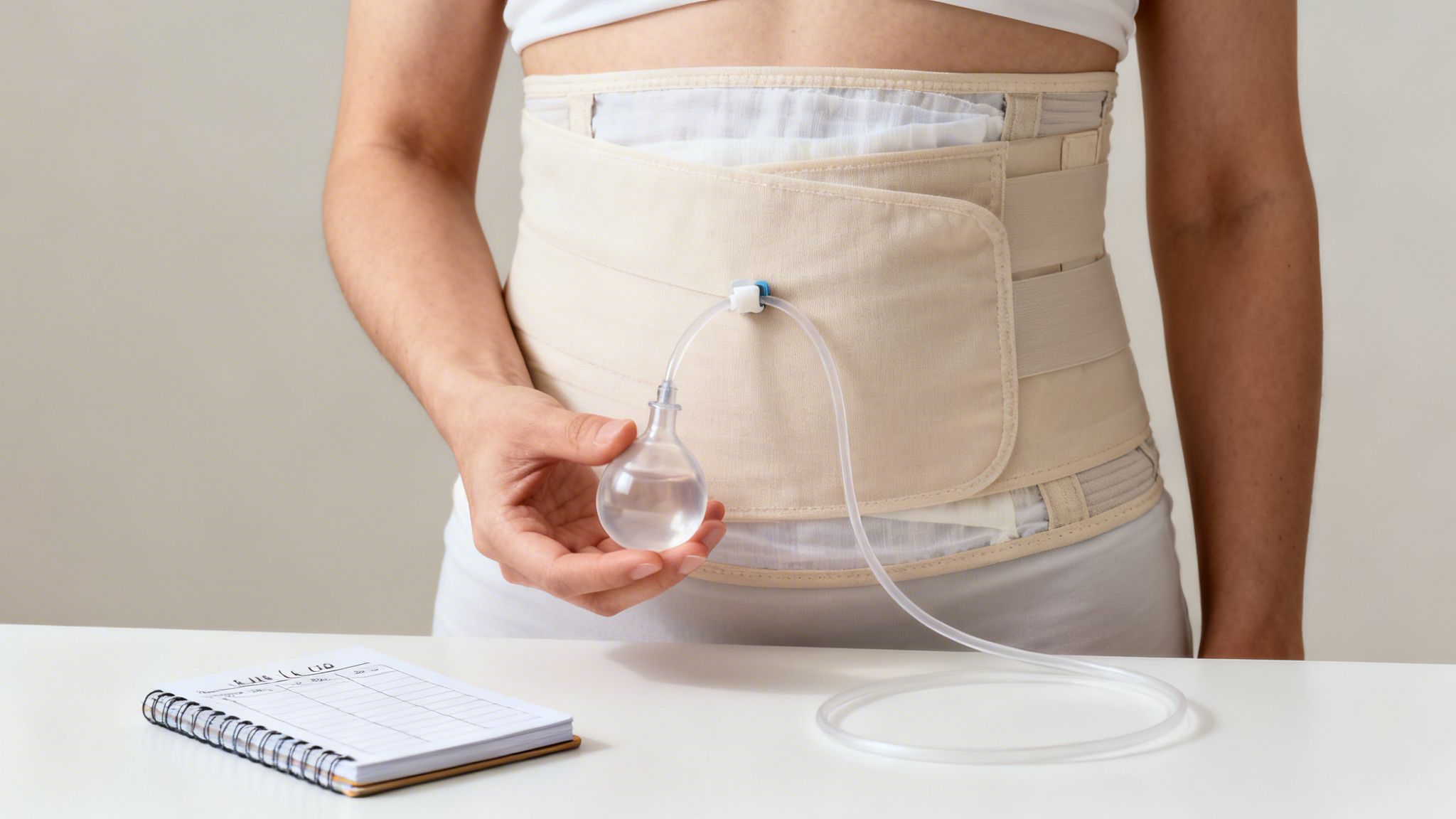
Think of the compression garment as an external support system for your newly contoured abdomen. It applies constant, even pressure that helps your skin adhere to the underlying muscle tissue, minimizes bruising, and significantly controls postoperative swelling. Simultaneously, surgical drains, such as the commonly used Jackson-Pratt (JP) drains, work internally to remove the natural fluid that accumulates in the surgical space, further preventing swelling and the risk of seroma.
Actionable Tips for Success
Properly managing these elements is a hands-on process that gives you direct control over your healing.
Compression Garment Protocol: Your surgeon will provide a specific timeline, but a common schedule involves wearing your medical-grade garment 24/7 (except when showering) for the first 3-4 weeks. After that, you may transition to daytime-only wear for another few weeks.
- Invest in Multiples: Purchase at least two garments. This allows you to wear one while the other is being washed and dried, ensuring you never miss valuable compression time.
- Prioritize Comfort: Place a thin, soft cotton tank top or camisole under your garment to act as a barrier, reducing skin irritation and chafing.
Surgical Drain Management: Diligent drain care is vital for preventing infection and ensuring timely removal.
- Log Everything: Empty your drain bulbs at least twice a day, or as directed by your surgeon. Use a small notebook to log the date, time, and amount of fluid from each drain separately. This log is the key data Dr. Bain will use to determine when it’s safe to remove them.
- Maintain the System: Keep the drain tubing secured to your clothing or garment with a safety pin to prevent accidental pulling. Ensure the bulb hangs lower than the insertion site to allow gravity to assist with drainage. Do not attempt to remove drains yourself.
2. Strategic Pain Management and Medication Adherence
Effective pain control after a tummy tuck is about more than just comfort; it's a strategic necessity that enables crucial early movement, reduces stress on your body, and can even lower your overall need for opioid medications. A multimodal pain plan, as recommended by surgeons like Dr. Michael A. Bain, involves a combination of prescription medications, over-the-counter aids, and non-pharmacological techniques. Adhering to this plan is one of the most important tummy tuck recovery tips for a smoother, more comfortable initial healing phase.
Managing pain proactively prevents it from escalating to a severe level, which is much harder to control. By staying ahead of the pain curve, you can walk, get in and out of bed, and perform necessary self-care with greater ease, which in turn helps prevent complications like blood clots. This approach is central to modern surgical recovery protocols endorsed by The American Society of Plastic Surgeons (ASPS).
Actionable Tips for Success
A well-managed pain strategy puts you in control, helping you navigate the first one to two weeks with confidence and greater comfort.
Follow a Proactive Medication Schedule: The goal is to maintain a steady level of pain relief, not to chase a high pain score. For the first few days, take your prescribed pain medication on a strict schedule, even if you feel okay.
- Set Alarms: Use your phone to set reminders for every dose. This is especially critical for overnight doses to prevent waking up in severe pain.
- Keep a Pain Diary: Log the time you take medication and rate your pain level (e.g., on a scale of 1-10). This data is incredibly useful when discussing your progress and any necessary adjustments with your surgical team.
Incorporate Cold and Heat Therapy: These simple tools are powerful adjuncts to your medication regimen.
- Ice for the First 48-72 Hours: Apply cold packs wrapped in a thin towel to the areas around your abdomen (like your hips and flanks) for 15-20 minutes at a time. This helps numb the area, constrict blood vessels, and significantly reduce swelling and inflammation.
- Heat After 72 Hours (with clearance): Once your surgeon gives you the green light, applying a heating pad on a low setting to your lower back can help relax tight muscles that become sore from walking in a bent-over position. Never apply heat directly to your numb abdomen or incisions.
3. Gradual Activity Progression and Exercise Modification
Rushing back to your normal routine is one of the biggest mistakes you can make after a tummy tuck. Gradual activity progression is a structured, phased approach designed by your surgeon to reintroduce movement and exercise safely. This methodical plan prevents complications like suture tearing, increased swelling, or seroma formation, while allowing your body to regain strength and mobility without compromising your surgical results. Following these tummy tuck recovery tips for activity is non-negotiable for protecting the delicate internal repairs made to your abdominal muscles.
This approach isn't about being sedentary; it's about smart, controlled movement. The goal is to encourage blood flow for healing while avoiding any strain on your abdominal wall. For example, a patient might return to a desk job after three weeks but will need to incorporate standing breaks and short walks throughout the day. Another might feel ready to run at eight weeks, but only after receiving explicit clearance from Dr. Bain, who has confirmed the abdominal muscles are sufficiently healed. Strenuous gym workouts involving the core are often postponed until the 10-12 week mark for this same reason.
Actionable Tips for Success
Your surgeon's timeline is your definitive guide, but these general tips will help you navigate your return to daily life and fitness.
- Follow Your Surgeon's Timeline: Your recovery is unique. Dr. Bain will provide a written activity schedule based on your specific procedure and healing progress. Adhere to it precisely, as it’s customized for your safety.
- Embrace Gentle Walking: Light walking is your most important exercise in the early weeks. Start with short, 5-10 minute walks around your home during the first week. Gradually increase the duration and frequency as you feel comfortable, which is crucial for preventing blood clots.
- Mind Your Movements: For the first six weeks, completely avoid bending at the waist, twisting your torso, and lifting anything heavier than a gallon of milk (about 8-10 pounds). Use your legs to squat when picking things up from the floor.
- Optimize Your Rest: Sleep with a pillow or wedge under your knees. This keeps your hips flexed, reducing tension on the abdominal incision line and providing significant comfort.
- Plan for Practical Limitations: You will be unable to drive until you are off all prescription pain medication and can react quickly without pain, typically 1-2 weeks. Use stairs cautiously, taking them one at a time and using handrails for support. This careful approach is similar to what is recommended for other procedures, as you can see in this week-by-week breast lift recovery guide.
4. Proper Positioning and Sleep Setup for Optimal Healing
One of the most impactful tummy tuck recovery tips involves how you position your body, especially during rest and sleep. Maintaining a specific semi-reclined, "jackknife" position is essential for minimizing tension on your abdominal incision line and reducing swelling. Dr. Michael A. Bain stresses that this isn't just about comfort; it's a therapeutic posture that directly supports the healing of your repaired abdominal muscles and skin, preventing strain that could compromise your surgical results.

Think of your body as a system under repair. Lying flat or standing up straight too soon creates a pulling force on the horizontal incision. By keeping your torso slightly elevated and your knees bent, you create slack in the abdomen, which alleviates this tension. Patients often find that a recliner chair becomes their best friend during the first one to two weeks, as it naturally enforces this ideal position. Others build a "recovery nest" in bed using a system of pillows.
Actionable Tips for Success
Creating the right sleep and rest environment is a proactive step you can take to manage pain and accelerate healing.
Create Your Recovery Nest: You don't need a hospital bed to achieve the right posture. You can effectively create this setup in your own home.
- Use a Wedge System: Invest in a multi-piece wedge pillow system. These are specifically designed for post-surgical recovery and provide firm, stable support for your back and under your knees.
- DIY with Pillows: If you don't have a wedge, stack several firm pillows to elevate your upper body to about a 45-degree angle. Then, place another set of pillows under your knees to keep them bent. Add side pillows to prevent you from rolling over onto your stomach or side while asleep.
Establish Your Home Base: Your recovery station will be your primary location for the first several days.
- The Recliner Advantage: Many patients find sleeping in a comfortable recliner for the first 1-2 weeks is the easiest way to maintain the correct position without effort.
- Bedroom Optimization: For optimal comfort and ease of movement, exploring options like adjustable beds can be incredibly beneficial for finding the perfect position. This allows you to transition from resting to sitting up with minimal core engagement.
- Timeline: Plan to maintain this flexed position for at least two weeks, gradually transitioning to a flatter position as your body allows, usually around weeks three to four. Always get your surgeon's clearance before attempting to sleep flat.
5. Nutrition and Hydration for Accelerated Healing
What you eat and drink after surgery is just as important as how you care for your incisions. Strategic nutrition and proper hydration are fundamental pillars of a successful recovery, directly fueling your body’s ability to repair tissue, build collagen, fight infection, and manage inflammation. This approach, championed by Registered Dietitian Nutritionists and integrated into recovery guidelines by the American Society of Plastic Surgeons (ASPS), is a powerful tool for accelerating your healing journey and is one of the most proactive tummy tuck recovery tips you can follow.
Proper nutrition provides the essential building blocks for wound closure and minimizes common post-operative side effects, such as constipation from pain medication. Think of your diet as an internal support system. High-quality protein helps rebuild the abdominal muscles repaired by Dr. Bain, while vitamins and minerals act as the catalysts for every cellular repair process. Hydration is equally critical, helping to flush anesthesia from your system, transport nutrients to your cells, and reduce fluid retention.
Actionable Tips for Success
Taking control of your post-op diet gives you the power to actively support your body’s healing mechanisms and enhance your comfort.
Prepare and Prioritize Protein: Your body's protein needs are significantly increased after surgery to repair tissues. Aim for protein at every meal.
- Pre-Surgery Meal Prep: Before your procedure, prepare and freeze single-serving, protein-rich meals like lentil soup, chicken and vegetable stir-fry, or beef stew. This makes healthy eating effortless when your energy is low.
- Meet Your Targets: Focus on lean meats, poultry, fish, eggs, Greek yogurt, and legumes. If you struggle to eat enough, supplement with a high-quality protein shake to ensure you're meeting your recovery goals.
Hydrate and Balance Nutrients: Smart food and fluid choices can make a significant difference in your comfort and reduce swelling.
- Drink Water Consistently: Keep a water bottle with you at all times. Proper hydration is key to reducing swelling and preventing constipation, a common side effect of pain medication.
- Limit Sodium and Alcohol: High-sodium foods can worsen swelling and fluid retention. Avoid processed foods, canned soups, and fast food. You must also avoid alcohol completely while taking prescription pain medication.
- Eat the Rainbow: Incorporate a variety of colorful fruits and vegetables into your diet. They are packed with vitamin C and antioxidants, which are vital for collagen synthesis and immune support. For more detailed guidance, you can learn more about the ideal diet after a tummy tuck.
6. Follow-up Appointments, Incision Monitoring and Warning Signs
Your direct involvement in monitoring your recovery is just as important as the care you receive from your surgical team. A structured approach to follow-up appointments and daily self-checks forms a crucial feedback loop. This process allows your surgeon, like Dr. Michael A. Bain, to accurately track your healing progress, intervene early if complications arise, and make necessary adjustments to your recovery plan. This vigilance is one of the most effective tummy tuck recovery tips for ensuring your safety and achieving the best possible result.
Active participation transforms you from a passive patient into an informed partner in your own healing. Scheduled post-operative visits are non-negotiable checkpoints where drains or sutures are removed, and progress is professionally assessed. Between these visits, your daily monitoring of incisions, swelling, and overall well-being provides the real-time data needed to spot potential issues, such as infection or poor wound healing, before they become serious problems.
Actionable Tips for Success
Creating a system for tracking your progress and attending appointments gives you peace of mind and control over the recovery journey.
Appointment and Data Management: Stay organized to ensure nothing is missed.
- Confirm and Calendar: Before you leave the surgery center, confirm the dates and times for all your post-op appointments. Immediately add them to your calendar with reminders.
- Bring Your Logbook: If you still have surgical drains, always bring your output log to your follow-up. The detailed data is essential for your surgeon to decide if the drains are ready for removal.
Incision Monitoring and Documentation: Consistent daily checks are your first line of defense.
- Create a Visual Diary: Take clear, well-lit photos of your incisions daily for the first few weeks. Try to use the same lighting and angle each time to create a consistent visual record of your healing progression. This can be invaluable for showing your surgeon subtle changes.
- Know Your Warning Signs: Be vigilant for any signs of complication. Document and immediately report any of the following to your surgeon's office:
- Fever above 101°F (38.3°C)
- A sudden increase in pain not relieved by medication
- Spreading redness, warmth, or hardness around the incision
- Pus or foul-smelling drainage from the incision site
- Significant, new, or asymmetrical swelling in your abdomen or legs
- Dress for Success: Wear loose, comfortable clothing like zip-up hoodies and soft sweatpants to your appointments. This makes it easier for the medical team to examine your incisions and drains without causing discomfort.
7. Scar Management and Long-term Aesthetic Optimization
Your tummy tuck incision is designed to be low and easily concealed, but proactive scar management is a key part of your long-term aesthetic success. This isn't a passive process; it's a dedicated routine that can dramatically influence how your scar matures over the next 12 to 18 months. By following a strategic plan involving sun protection, silicone therapy, and massage, you can actively guide the healing process for a finer, flatter, and less noticeable result, which is one of the most important tummy tuck recovery tips for your final appearance.
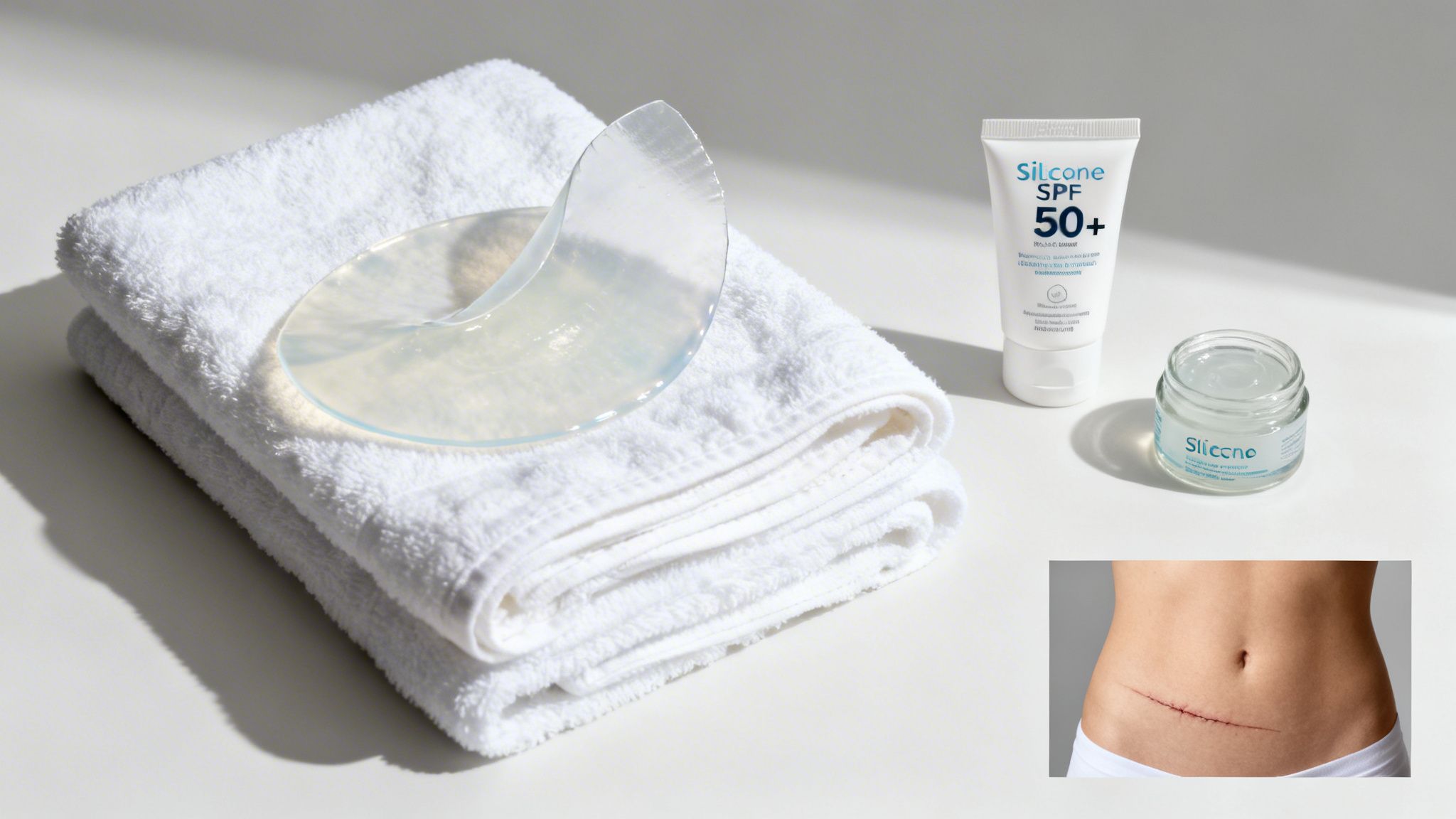
A scar’s final look is determined by how collagen rebuilds itself. Effective scar care aims to create an ideal healing environment that prevents excessive, disorganized collagen production which leads to raised or discolored scars. Silicone therapy, for example, works by hydrating the scar tissue and regulating the growth factors involved in collagen synthesis. This helps the scar mature into a thin, pale line rather than a thick, red, or purple band.
Actionable Tips for Success
Taking control of your scar care from the beginning gives you the best chance at an optimal outcome. This multi-phase approach adapts to your scar's needs as it heals.
Early-Stage Protocol (Weeks 2-6): Your initial focus is on creating a clean, protected healing environment.
- Follow Incision Care: Until your incisions are fully closed and all scabs have fallen off, your only job is to keep the area clean and dry as directed by Dr. Bain. Do not apply any creams or gels not approved by your surgeon during this fragile period.
- Introduce Silicone: Once cleared by your surgeon (typically around 2-3 weeks post-op), begin using silicone gel or sheets. Apply a thin layer of gel twice daily or wear the sheets for 12-24 hours a day. Consistency is crucial for effectiveness.
Maturation Phase Protocol (Week 6+): As the scar gains strength, you can incorporate more active techniques.
- Begin Gentle Massage: After getting the green light from your surgeon, start gently massaging the scar for 5-10 minutes, 2-3 times per day. Use a vitamin E oil or your silicone gel as a lubricant and apply firm, circular pressure along the length of the scar to help break down collagen buildup and improve flexibility. The principles of post-surgical care often overlap, and you can find related guidance in our breast reduction recovery tips.
- Prioritize Sun Protection: UV exposure can cause a healing scar to permanently darken (hyperpigment). For at least 12 months, you must protect your scar by applying a broad-spectrum sunscreen with SPF 50+ or keeping it completely covered with clothing or a silicone sheet.
- Consider Professional Treatments: If you have residual redness or thickness after 6-12 months, discuss options like laser treatments or medical-grade microneedling with your surgeon to further refine the scar’s appearance.
8. Psychological Support and Realistic Expectations Management
The physical healing after a tummy tuck is only half the journey; your emotional and mental recovery is equally critical for a positive overall experience. Managing your expectations and establishing a strong psychological support system are not soft suggestions but essential components of your recovery. Surgeons like Dr. Michael A. Bain emphasize that a patient's satisfaction is deeply connected to their understanding of the healing timeline, which includes emotional highs and lows, significant swelling, and a period of physical dependency.
It is completely normal to experience a "post-op slump" a few weeks after surgery. The initial excitement can wane, replaced by frustration with swelling, discomfort, and impatience to see the final results. Understanding that these feelings are a temporary and common part of the process is one of the most important tummy tuck recovery tips. Preparing for this emotional rollercoaster ahead of time allows you to navigate it with resilience rather than distress.
Actionable Tips for Success
Proactively managing your mental well-being gives you a sense of control during a time when you may feel physically vulnerable.
Educate and Align Expectations: Before surgery, have a detailed conversation with Dr. Bain about the day-by-day and week-by-week realities of recovery. Understand that significant swelling can persist for months, and your final, refined contour will not be visible for 6-12 months.
- Avoid the Mirror Trap: In the first several weeks, resist the urge to obsessively check your reflection for progress. Swelling fluctuates dramatically, which can be discouraging. Instead, focus on following your post-op instructions.
- Document Your Journey: Take weekly progress photos from the same angles. This creates an objective visual record that helps you appreciate the gradual but significant changes, which are often hard to notice day-to-day.
Build Your Support Network: You will be physically limited and emotionally vulnerable, especially during the first one to two weeks.
- Arrange Practical Help: Designate friends or family members to assist with meals, child care, and household chores. Knowing these basics are covered reduces immense stress.
- Seek Professional Guidance: Beyond the physical aspects, your mental well-being is vital during recovery; consider exploring counselling services if you experience persistent feelings of depression, anxiety, or body dysmorphia. Professional support can provide coping strategies tailored to your experience.
8-Point Tummy Tuck Recovery Care Comparison
| Intervention | 🔄 Implementation complexity | ⚡ Resource requirements | ⭐ Expected outcomes | 📊 Ideal use cases | 💡 Key advantages / Tips |
|---|---|---|---|---|---|
| Wound Care, Compression Garment and Drainage Management | Moderate — requires patient education for drains and garment fitting | High — medical-grade garments, drains, dressing supplies, clinic follow-up | ⭐⭐⭐⭐ — reduces swelling, lowers seroma risk, improves contour | Essential after abdominoplasty, body lift, extensive contouring | Use multiple garments for rotation; log drain output; apply over thin cotton layer |
| Strategic Pain Management and Medication Adherence | Moderate — coordinated multimodal regimen and monitoring | Moderate — prescriptions (opioids short-term), OTC meds, ice, possible consult | ⭐⭐⭐⭐ — effective pain control, enables early mobilization, lowers opioid use | Immediate post-op period (first 1–2 weeks) for severe pain control | Take meds proactively, set reminders, plan opioid taper with surgeon |
| Gradual Activity Progression and Exercise Modification | Low–Moderate — requires adherence to phased plan | Low — guidance, time; possible physiotherapy if indicated | ⭐⭐⭐⭐ — prevents complications, restores strength safely | Return-to-activity planning, maintaining cardiovascular fitness safely | Start with short frequent walks, avoid lifting >5–10 lb, follow surgeon timeline |
| Proper Positioning and Sleep Setup for Optimal Healing | Low — simple positional adjustments but can be uncomfortable | Low–Moderate — wedge pillow or adjustable bed, supportive pillows | ⭐⭐⭐ — reduces incision tension and morning stiffness, improves comfort | First 1–4 weeks post-op, patients with incision tension or sleep disruption | Semi-recline 30–45°, pillow under knees, wear compression during sleep as directed |
| Nutrition and Hydration for Accelerated Healing | Low–Moderate — meal planning and tracking intake | Moderate — high-protein foods, supplements, meal prep supplies | ⭐⭐⭐⭐ — accelerates wound healing, supports immunity, reduces constipation | All patients; especially those with low baseline protein or poor appetite | Prioritize protein each meal, prep freezer meals, use shakes, limit sodium |
| Follow-up Appointments, Incision Monitoring and Warning Signs | Low — scheduling and active participation in visits | Low–Moderate — clinic visits, travel, photo documentation | ⭐⭐⭐⭐ — early detection of complications and tailored recovery adjustments | Standard post-operative care at routine intervals (1 wk, 2 wk, etc.) | Confirm dates before discharge, photograph incisions, bring drain log |
| Scar Management and Long-term Aesthetic Optimization | Moderate — ongoing regimen and possible professional treatments | Moderate — silicone products, sun protection, clinic treatments (laser) | ⭐⭐⭐⭐ — significant long-term scar improvement over 12–18 months | Long-term aesthetic optimization after incision healing | Begin silicone when cleared, protect from sun SPF50+, consider therapies at 6–12 weeks |
| Psychological Support and Realistic Expectations Management | Low–Moderate — planning support and potential counseling | Low–Moderate — support network; professional therapy if needed | ⭐⭐⭐ — improves coping, satisfaction, and adherence to recovery | Patients prone to anxiety, body-image concerns, or limited social support | Educate pre-op on timelines, arrange support, seek counseling if symptoms persist beyond expected timeframe |
Partnering for Success: Your Consultation with Dr. Bain
Your journey through tummy tuck recovery is a deeply personal process, a period of healing that demands patience, diligence, and a strong support system. We've explored a detailed roadmap covering everything from managing drains and compression garments to the nuances of scar therapy and maintaining a positive mindset. The overarching theme is clear: your active participation is the key to a smooth, safe, and successful outcome.
Think of the information in this guide not as a rigid set of rules, but as a comprehensive toolkit. You now have a solid understanding of the practical steps involved in your healing. You know the importance of strategic pain management, the necessity of gradual activity progression, and the profound impact of proper nutrition on your body's ability to repair itself. These are the foundational pillars of your recovery.
From General Knowledge to Personalized Strategy
The most powerful takeaway from this extensive list of tummy tuck recovery tips is that preparation is everything. Mastering these concepts before your surgery transforms anxiety into confidence. It shifts your role from a passive patient to an informed partner in your own care.
However, general advice can only take you so far. The true path to an exceptional result is paved with personalized guidance from an expert. Your unique anatomy, your specific surgical plan (whether it's a mini, full, or extended tummy tuck), your health history, and even your lifestyle all play a critical role in shaping your recovery experience. This is where the expertise of a board-certified plastic surgeon becomes indispensable. A one-on-one consultation allows you to translate this general knowledge into a concrete, customized action plan.
Key Insight: The difference between a good recovery and a great one often lies in the quality of communication and partnership between you and your surgeon. This relationship is built on trust, transparency, and a shared understanding of your goals and the path to achieving them.
Maximizing Your Consultation
Your consultation is the most important step in your entire tummy tuck journey. It is your opportunity to ensure you are fully aligned with your surgeon and their team. With a specialist like Dr. Michael A. Bain, this meeting is a collaborative session designed to address every one of your questions and concerns.
To make the most of this crucial appointment, come prepared. Use this article as a springboard for your discussion.
- Review Your Support System: Discuss who will be helping you during the first one to two weeks. Explain your home environment so your surgeon can offer specific tips for your setup, like where to create your "recovery nest."
- Discuss Specific Protocols: Ask Dr. Bain about his preferred methods. What type of compression garments does he recommend and for how long? What is his specific pain management philosophy? What are his timeline expectations for returning to work and exercise based on your career and fitness level?
- Voice Your Concerns: Be open about your anxieties. Whether you're worried about pain, nausea, or the appearance of your scar, sharing these concerns allows your surgeon to provide reassurance and targeted solutions.
This dialogue is not just about gathering information; it is about building a foundation of trust. Knowing that you have a clear, surgeon-approved plan tailored just for you will empower you to navigate your recovery with confidence and peace of mind. Your aesthetic goals are important, but your safety and well-being are paramount. A detailed, personalized recovery strategy is what ensures all of those elements are prioritized, setting the stage for the beautiful, lasting results you deserve.
Your journey to a renewed, confident self begins with a conversation. Dr. Michael A. Bain, MD and his dedicated team in Newport Beach are committed to providing the personalized care and expert guidance essential for a successful tummy tuck. To create a recovery plan tailored specifically to you and take the first step toward your aesthetic goals, schedule your personal consultation at Michael A. Bain, MD today.